The Duleep Trophy has reached the stage where there is very little room for error.
Four teams remain, two places are available in the final, and the attention is beginning to shift from simply winning a zonal contest to what these matches could mean for the future of Indian red-ball cricket.
The 2026 Duleep Trophy semi-finals will be played at the BCCI Centre of Excellence in Bengaluru, with East Zone taking on Central Zone and North Zone facing South Zone.
There is plenty to watch in both games. East Zone have arrived after a commanding quarter-final victory, with teenage batting sensation Vaibhav Sooryavanshi once again attracting most of the attention. On the other side, Central Zone have the experience and balance to test him in conditions that demand patience.
The second semi-final has its own major storyline. Gurnoor Brar returns to North Zone after being part of India’s Test setup, giving him an important opportunity to get more red-ball cricket under his belt. His contest against South Zone’s experienced batting group could be one of the most interesting battles of the match.
For the players involved, this is about much more than reaching a domestic final.
These are the kind of matches where performances can influence the next India A squad, future Test selections and the wider red-ball plans of Indian cricket.
Duleep Trophy 2026 Semi-Finals: What Is at Stake?
The Duleep Trophy has traditionally been an important platform for players trying to move closer to the Indian Test side.
That role has become even more significant as the domestic calendar continues to produce a steady stream of young talent.
The semi-finals provide four teams with a chance to play against stronger opposition while handling the pressure of a knockout match.
There is also an obvious individual angle.
A batter who makes a hundred here, a fast bowler who produces a five-wicket haul or an all-rounder who controls a game can quickly find his name entering selection conversations.
For the younger players, it is an opportunity to show that their game can survive when the opposition gets stronger.
For established players, it is a chance to remind selectors that they are still ready.
And for players coming back from international duty, it is about maintaining rhythm.
That makes this year’s semi-finals particularly interesting.
East Zone vs Central Zone: Youth Meets Experience
East Zone enter their semi-final with plenty of confidence after their dominant quarter-final performance against North East Zone.
They won that match by an innings and 210 runs, putting themselves firmly into the last four.
Now the challenge is considerably tougher.
Central Zone have a well-balanced side and enough experience to make East Zone work for every run.
The biggest individual storyline, however, is obvious.
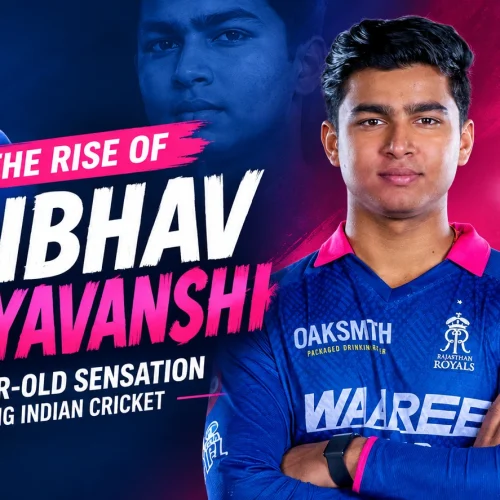
Vaibhav Sooryavanshi.
The 15-year-old has already spent most of 2026 breaking records, but the Duleep Trophy offers him a completely different examination.
This is red-ball cricket.
There is no powerplay.
There are no fielding restrictions forcing captains to keep men inside the circle.
A batter cannot simply rely on attacking the first few overs.
The bowlers can build pressure over long spells, change their lines, set fields specifically for one batter and wait for mistakes.
For Vaibhav, that makes this match an important part of his development.
Vaibhav Sooryavanshi’s Red-Ball Test
There is no doubt about Vaibhav’s ability to dominate white-ball cricket.
His 2026 IPL season was extraordinary, and his performances for India at the senior level have already created enormous attention.
But red-ball cricket asks different questions.
Can he leave the ball outside off stump?
Can he bat for 100 or 150 balls without feeling the need to attack?
Can he recover after losing an early wicket?
Can he score when the boundary options are limited?
Those are the questions Central Zone’s bowlers are likely to ask.
The answer will not come from one innings.
But every long stay at the crease will add something to his education.
Why This Match Matters for Vaibhav
It would be easy to look at Vaibhav’s age and simply treat this match as another opportunity for a teenager to gain experience.
But he has already moved beyond that stage.
The expectations around him are now enormous.
He has played international cricket.
He has scored hundreds in the IPL.
He has dominated Under-19 cricket.
That means the next part of his journey is learning how to handle situations where the game does not suit his natural attacking instincts.
A patient 80 could tell us as much about his development as another quick hundred.
In fact, it might tell us more.
Central Zone Have the Tools to Challenge East Zone
Central Zone will not be interested in Vaibhav’s age or reputation.
Their job will simply be to get him out.
That could mean attacking him early with the new ball before he gets settled, or using changes of pace and spin once he begins to dominate.
Central Zone’s experienced players also give them the ability to absorb pressure.
That could become important if East Zone start strongly.
In knockout cricket, momentum can change quickly.
A team can dominate for two sessions and suddenly find itself under pressure after losing three wickets.
Central Zone’s ability to stay in the game could therefore be just as important as their ability to take wickets.
East Zone’s Biggest Strength: Momentum
East Zone have already shown what they can do when their players get on top.
Their quarter-final victory was emphatic.
The bowling attack put North East Zone under constant pressure, while the batting lineup gave the bowlers plenty of room to work with.
Now they have to reproduce that intensity against a stronger opponent.
The semi-final will also test whether their younger players can maintain their composure when the match becomes tight.
A four-day knockout game can change direction several times.
East Zone will need patience.
They cannot afford to chase the game if Central Zone begin well.
North Zone vs South Zone: Gurnoor Brar Returns
The second semi-final has perhaps the most obvious India-selection storyline.
Gurnoor Brar returns to the North Zone side after his involvement with the Indian Test setup.
For the young fast bowler, the timing of the Duleep Trophy game is important.
Fast bowlers need overs.
They need match rhythm.
They need to keep their bodies accustomed to the workload of red-ball cricket.
Training and net sessions cannot completely replicate the demands of bowling 15 or 20 overs across a Test match.
That is why this Duleep Trophy appearance matters.
Brar gets the chance to bowl long spells against a quality South Zone batting lineup.
And selectors get another opportunity to assess him in a proper first-class environment.
Why Gurnoor Brar’s Return Matters
Gurnoor Brar has emerged as one of the young fast bowlers being watched closely by Indian cricket.
His height and ability to generate bounce give him an interesting profile.
But potential alone is not enough.
Fast bowling at the highest level is about consistency.
A bowler has to maintain his pace while also hitting the right areas for long periods.
He has to learn how to set up batters.
He needs to understand when to attack the stumps, when to use the short ball and when patience is the best weapon.
That is exactly what a Duleep Trophy semi-final can provide.
Brar is not simply returning to domestic cricket to get a few overs.
He has an opportunity to show that he can control a red-ball innings.
Brar vs South Zone’s Batting Lineup
South Zone’s batting depth will make this an interesting examination.
Brar will need to find a way through an experienced lineup rather than relying solely on pace.
The first spell could be particularly important.
If he can pick up an early wicket, North Zone can attack.
If South Zone’s openers settle in, Brar may have to work much harder and bowl longer spells to create chances.
That is where his discipline will be tested.
For a young fast bowler, these are valuable lessons.
The Bigger India Selection Picture
The Duleep Trophy semi-finals arrive at an interesting point for Indian cricket.
The national Test setup is constantly evolving.
Experienced players remain important, but selectors also need to know which younger cricketers are ready to step into international cricket when opportunities appear.
That makes domestic red-ball performances extremely valuable.
A player does not necessarily need to score 200 to attract attention.
Sometimes a technically sound 70 against a quality attack can be just as impressive.
Similarly, a fast bowler who takes four wickets while bowling 20 disciplined overs may make a stronger impression than someone who takes five wickets but leaks runs.
Selectors look at the bigger picture.
These matches give them another opportunity to do that.
Conditions in Bengaluru Could Play a Major Role
Playing at the BCCI Centre of Excellence in Bengaluru adds another layer to the contest.
The conditions can offer something for both batters and bowlers, depending on how the pitch develops.
The new ball could provide assistance to seamers, particularly early in the innings.
As the match progresses, batters who settle down should have opportunities to score.
That makes the first session important.
The team that handles the opening spells better could gain a significant advantage.
For Vaibhav, that means resisting the temptation to force the pace.
For Brar, it means using the conditions intelligently rather than simply trying to bowl fast.
Players to Watch in East Zone vs Central Zone
Vaibhav Sooryavanshi — East Zone
There is no escaping the spotlight.
Every appearance from the teenager attracts attention, but this match is particularly interesting because of the format.
A big red-ball innings would add another dimension to his rapidly developing career.
Ishan Kishan — East Zone
As an experienced batter and wicketkeeper, Kishan brings valuable knowledge to the East Zone side.
His role will be particularly important if the young batters find themselves under pressure.
Rajat Patidar — Central Zone
Patidar is one of the experienced names in Central Zone’s lineup.
His ability to build an innings and handle pressure could prove crucial in a four-day knockout match.
Gurnoor Brar — North Zone
Brar’s return is one of the biggest talking points of the second semi-final.
The focus will be on his pace, control and ability to bowl long spells.
South Zone’s Senior Batters
South Zone’s experienced batting group will have an important role to play.
If they can force North Zone’s bowlers into long spells, the pressure could gradually shift.
Key Battles That Could Decide the Semi-Finals
Vaibhav Sooryavanshi vs Central Zone’s New-Ball Attack
This could be the most watched battle of the first semi-final.
Vaibhav’s natural game is aggressive.
Central Zone will want to make him play early.
If Vaibhav survives that period, the balance could quickly change.
Rajat Patidar vs East Zone’s Spinners
Patidar’s experience against spin will be tested as East Zone look to control the middle sessions.
If he can build a substantial innings, Central Zone could put serious pressure on East Zone.
Gurnoor Brar vs South Zone’s Top Order
This is the battle that could define the second semi-final.
Brar needs wickets.
South Zone need to survive his opening spells.
Whoever wins those exchanges could take control of the match.
Why the Duleep Trophy Still Matters
In an era dominated by T20 cricket, competitions like the Duleep Trophy remain extremely important.
T20 can reveal a player’s explosive ability.
First-class cricket reveals something else.
It tests patience.
It tests concentration.
It tests fitness.
It tests technique.
Most importantly, it tests whether a player can contribute over several days rather than several hours.
For India’s Test ambitions, that matters enormously.
Players such as Vaibhav are learning how to build that side of their game.
Players such as Brar are learning how to handle the physical demands of sustained red-ball bowling.
That is why these semi-finals should not be viewed simply as two domestic matches.
They are part of the bigger development pathway.
Can Vaibhav Take East Zone Into the Final?
East Zone have the momentum.
Central Zone have experience.
Vaibhav has the ability to change the game.
But a Duleep Trophy semi-final is not the IPL.
The youngster cannot simply walk in and expect the bowlers to make mistakes.
If Central Zone bowl patiently and force him to defend, his technique and temperament will be tested.
That is exactly why this match is so important for him.
A match-winning innings would be another major milestone.
But even a patient, hard-earned contribution could be hugely valuable.
At this stage of his career, every red-ball innings is another lesson.
Who Has the Advantage?
Both semi-finals look competitive, but for different reasons.
East Zone vs Central Zone feels like a fascinating contest between youth and experience.
East Zone have momentum and some exciting young players, while Central Zone possess the experience needed to handle a knockout match.
North Zone vs South Zone could depend heavily on the fast-bowling battle.
If Gurnoor Brar can make an early impact, North Zone will have a strong chance of controlling the game.
If South Zone’s batting unit manages to neutralise him, the pressure will move back onto North Zone.
There is no obvious walkover.
And that is exactly what you want from a semi-final.
Final Word
The Duleep Trophy 2026 semi-finals have arrived with plenty of storylines.
For East Zone, it is about carrying the momentum of their huge quarter-final victory into another demanding contest.
For Central Zone, it is about using experience to stop a talented East Zone side from reaching the final.
For North Zone, the return of Gurnoor Brar adds another dimension to their campaign.
And for Vaibhav Sooryavanshi, this is another opportunity to show that his game is developing beyond the explosive T20 cricket that first made him famous.
The teenager has already achieved things most cricketers can only dream about.
Now comes the less glamorous but equally important part of the journey — learning how to bat for long periods, survive difficult spells and win matches through patience as well as aggression.
That is what makes this semi-final so interesting.
The sixes may grab the headlines, but a long red-ball innings could tell us far more about where Vaibhav’s career is heading.
And for Gurnoor Brar, a strong spell against South Zone could strengthen his case as one of India’s fast-bowling prospects for the future.
The Duleep Trophy has always been a proving ground.
In Bengaluru, four teams now have one more chance to prove that they belong at the next level.