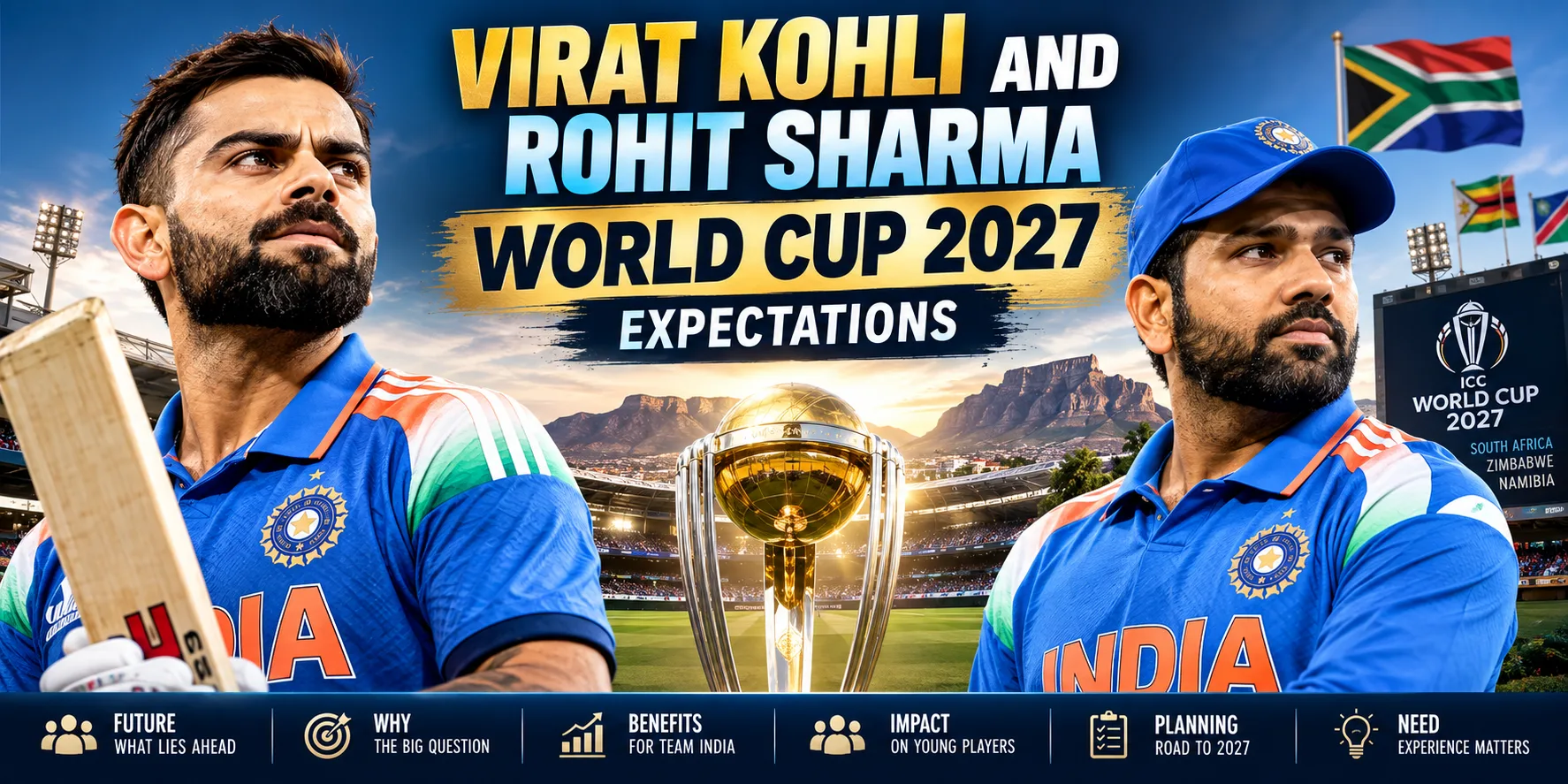
The 2027 ICC Men’s Cricket World Cup is already generating excitement among Indian cricket fans. While the tournament will bring together the world’s leading ODI teams, one question continues to dominate conversations across India. Will Virat Kohli and Rohit Sharma play another World Cup together? For millions of supporters, the possibility of watching these two modern Indian cricket legends represent the country in another global tournament carries enormous emotional significance. Virat Kohli has built his reputation through consistency, remarkable run chases and an unmatched hunger for scoring runs. Rohit Sharma, meanwhile, has transformed India’s approach to ODI batting with his aggressive starts, exceptional timing and ability to score enormous hundreds. Together, they have been central to India’s ODI success for more than a decade. However, the road to the 2027 World Cup involves more than reputation and past achievements. Age, fitness, current form, team combinations and India’s long-term preparation will all influence their prospects. With the tournament scheduled to take place in South Africa, Zimbabwe and Namibia, India will also need to prepare for unfamiliar conditions, demanding travel schedules and strong international competition. This article explores Virat Kohli and Rohit Sharma World Cup 2027 expectations, their potential roles, India’s preparation, the challenges ahead and what their participation could mean for Indian cricket. Virat Kohli and Rohit Sharma remain central figures in discussions surrounding India’s 2027 ODI World Cup plans. Latest Update on Virat Kohli and Rohit Sharma World Cup 2027 Participation Updated September 25 2026 The latest developments offer encouraging signs for supporters hoping to see Kohli and Rohit in the 2027 World Cup. According to the International Cricket Council, Kohli reaffirmed his commitment to playing the 2027 tournament in May 2026. He explained that his preparation remained focused on international cricket and that representing India at another World Cup continued to motivate him. ICC Rohit’s position has also attracted considerable attention. Following speculation about his international future, BCCI secretary Devajit Saikia publicly dismissed suggestions that the experienced opener was approaching an immediate ODI retirement. India Today More recently, the BCCI announced India’s squad for the home ODI series against West Indies, beginning September 27, 2026. Both players were included. The squad also confirmed Shubman Gill as India’s ODI captain, highlighting the ongoing transition in Indian cricket’s leadership. BCCI These developments establish three important points: The distinction matters. Being available for ODI cricket in 2026 does not automatically secure a place in a major tournament the following year. Nevertheless, the possibility of both players featuring in another World Cup remains a genuine subject of discussion. Why the 2027 World Cup Matters So Much for Virat Kohli and Rohit Sharma Every World Cup carries its own significance, but the 2027 edition could represent an important milestone in the careers of both players. Kohli will turn 39 in November 2027, while Rohit will turn 40 in April 2027. Their participation would therefore require sustained fitness, consistent performances and the ability to meet the physical demands of international ODI cricket. There is also the emotional weight of India’s recent World Cup history. The unfinished story of the 2023 World Cup India’s 2023 ODI World Cup campaign was memorable for its remarkable consistency. Rohit led the team with an aggressive batting approach, while Kohli delivered one of the finest individual batting performances in World Cup history. India reached the final after winning every match leading up to the title contest. However, Australia defeated India in Ahmedabad. For Indian supporters, the result remains a powerful memory. The disappointment was not simply about losing a cricket match. It was about watching a team that had performed exceptionally throughout the competition fall short in the final. Kohli finished the tournament with 765 runs, establishing the record for the most runs scored by a player in a single Men’s ODI World Cup. ICC Rohit’s aggressive opening performances helped establish India’s attacking approach. The two players contributed in different ways, but their combined influence shaped India’s batting identity. A potential appearance in 2027 would offer another opportunity to pursue the ODI World Cup title. Experience from winning ICC tournaments Both players also bring the experience of winning major international competitions. Kohli was part of India’s victorious 2011 ODI World Cup squad. Both players contributed to India’s 2024 T20 World Cup triumph and the 2025 Champions Trophy success. During the 2025 Champions Trophy, Kohli scored 218 runs and was selected in the ICC Team of the Tournament. ICC Such experience becomes particularly valuable when teams face difficult situations during knockout matches. Understanding how to handle pressure, assess conditions and respond to setbacks can make a meaningful difference. However, experience must be supported by current performance. India’s selectors will need to consider both when preparing the 2027 squad. Virat Kohli World Cup 2027 Expectations The importance of India’s number three Kohli’s potential role in 2027 extends beyond scoring centuries. His ability to manage an innings, rotate the strike and perform under pressure could provide stability to India’s batting lineup. His preparation and commitment to ODI cricket remain important factors in discussions about his World Cup prospects. 1. Providing stability in the middle overs One of Kohli’s greatest strengths is his understanding of ODI batting. Modern one-day cricket increasingly rewards aggressive stroke play. Teams regularly attempt to maintain high scoring rates throughout an innings. However, successful ODI batting still requires the ability to recognise changing match situations. Consider a scenario in which India loses two early wickets. An aggressive approach may help recover the scoring rate, but reckless batting could create further problems. Kohli’s experience allows him to assess the situation before deciding how quickly to accelerate. He can rebuild an innings through singles and doubles, develop partnerships and target particular bowlers when conditions become favourable. This ability could be especially important in South African conditions, where seam movement and bounce may challenge India’s top order. 2. Maintaining his reputation as a dependable run chaser Kohli has built much of his ODI reputation around successful run chases. His approach often involves
India vs Japan Cricket 2026 The Historic T20I, Two-Run Thriller and What It Means for Cricket in Japan
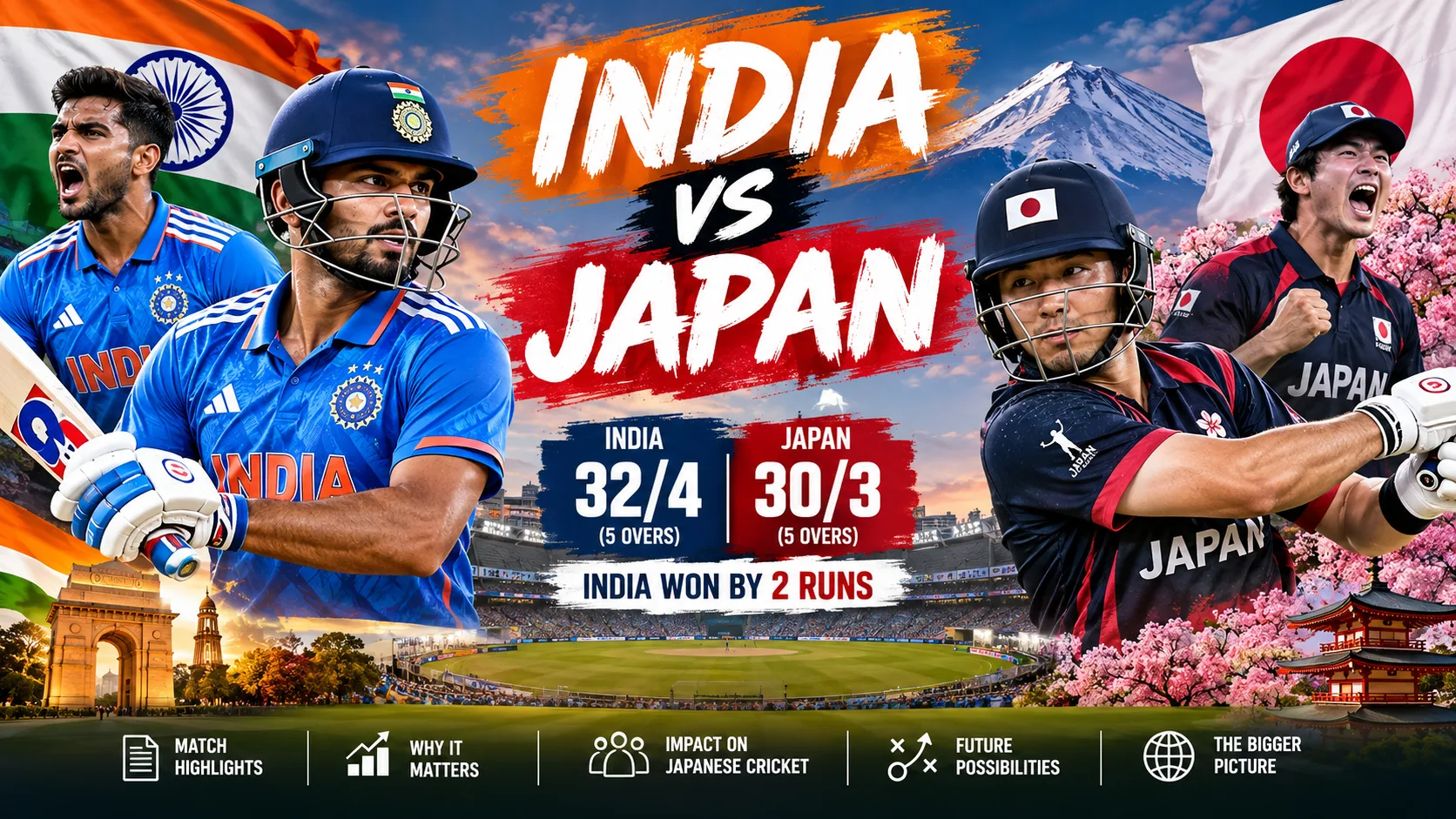
The India vs Japan cricket match in 2026 was never going to be just another T20 fixture. It was the first men’s international cricket meeting between India and Japan, played at the Sano International Cricket Ground in Tochigi on September 22, 2026. The match was also part of celebrations marking 75 years of India-Japan diplomatic relations and served as an important preparation game before the men’s cricket competition at the 2026 Asian Games. What nobody expected was how close the contest would become. India, the reigning ICC Men’s T20 World Cup champions, were restricted to just 32/4 in five overs after rain reduced the match to a five-over-a-side contest. Japan then pushed India all the way, finishing on 30/3 and losing by only two runs. On paper, India won. On the field, however, Japan showed that its cricket story is developing faster than many outside the country might realise. And that is what makes India vs Japan such an interesting cricket story. India vs Japan Match Overview Detail Information Match Japan vs India Competition Suzuki Cup – India-Japan 75th Anniversary Match Date September 22, 2026 Venue Sano International Cricket Ground, Tochigi, Japan Format T20 International India 32/4 in 5 overs Japan 30/3 in 5 overs Result India won by 2 runs India Captain Shreyas Iyer Japan Captain Kendel Kadowaki-Fleming The Japan Cricket Association officially recorded the result as Japan 30/3 versus India 32/4, with India winning by two runs. A Match That Made History Before the First Ball The first important point about India vs Japan is simple: these two men’s teams had never met in international cricket before this fixture. The ICC confirmed that the September 22 contest would be the first-ever men’s international cricket match between India and Japan. India arrived as reigning T20 World Cup champions, while Japan entered the contest looking to gain experience against one of cricket’s strongest international sides. The match was organised as the Suzuki Cup – 75th Anniversary Match Celebrating Japan-India Diplomatic Relations. That gave the game significance beyond cricket. For India, it was an opportunity to prepare for the Asian Games. For Japan, it was a chance to put its developing cricket structure under the spotlight. The Japan Cricket Association described the contest as a landmark event for Japanese cricket, while the BCCI said the match was part of the broader “Sport 75” initiative connected with the 75th anniversary of diplomatic relations. So although the scorecard says India vs Japan, the bigger story is about how cricket is moving into a new market. How India vs Japan Became a Two-Run Thriller The original match was supposed to provide a conventional T20 contest. Weather had other plans. Rain affected preparations around the match, and the game was eventually reduced to only five overs per side. That changed everything. In a normal 20-over game, a stronger squad generally has more time to recover from a poor start. A five-over match leaves almost no room. One wicket can change the entire contest. One boundary can change the required run rate. One wide can become hugely important. India batted first and managed 32/4. That was an unusually low total for a side containing several international-level players, but the shortened format and conditions created a completely different game. Japan’s bowlers made the most of the opportunity. Japan then began the chase. India’s bowlers were expected to control the innings, but Japan refused to disappear from the contest. The hosts eventually reached 30/3, falling only two runs short. That margin is tiny. For a five-over game, it meant the match came down to a handful of deliveries. Japan’s Fast Start Changed the Story One of the biggest talking points from the India vs Japan match was Japan’s bowling performance. According to the match report, Charlie Hara-Hinze dismissed Abhishek Sharma in the first over before removing Ishan Kishan in the following over. Those early wickets prevented India from building the kind of momentum normally expected from their top order. That was important for Japan. Instead of treating the occasion as an exhibition, Japan attacked. This is exactly the mentality captain Kendel Kadowaki-Fleming had spoken about before the game. He said Japan did not want simply to celebrate playing India. The team wanted to show what it could do as a men’s side. That attitude was visible in the five-over contest. Shreyas Iyer Provides India With Stability India needed somebody to stop the innings from collapsing completely. That responsibility fell to captain Shreyas Iyer. Iyer scored 16 from 12 deliveries, helping India reach 32/4. In such a short match, those runs became extremely valuable. There was no opportunity to construct a conventional innings. There was no time to settle. Every ball mattered. That is why the Indian captain’s contribution was important even though the final score was small. Japan’s Chase and the Final Over Drama Japan began its chase carefully. India used spin early, with Axar Patel dismissing Lachlan Yamamoto-Lake. Washington Sundar also picked up a wicket, while Japan captain Kendel Kadowaki-Fleming contributed 12 runs before being dismissed. By the final over, Japan had put itself in a position where victory was genuinely possible. India eventually defended the target. But the closing stages produced controversy around a wide call and the sequence of deliveries that followed. International reports noted the debate surrounding the umpiring decision, although the official scorecard records India as the two-run winner. For Japan, the disappointment was understandable. They had taken the reigning T20 World Cup champions to the final moments. For India, the match provided a reminder that shortened cricket can produce completely different dynamics. India vs Japan Was More Than a Result The scorecard tells us India won. The larger cricket story tells us something else. Japan can compete. Not yet consistently against the world’s strongest teams. Not yet with the depth India possesses. But the gap is not simply about talent anymore. It is also about experience, infrastructure, professional opportunities, coaching, competition and the number of players entering the sport. That distinction
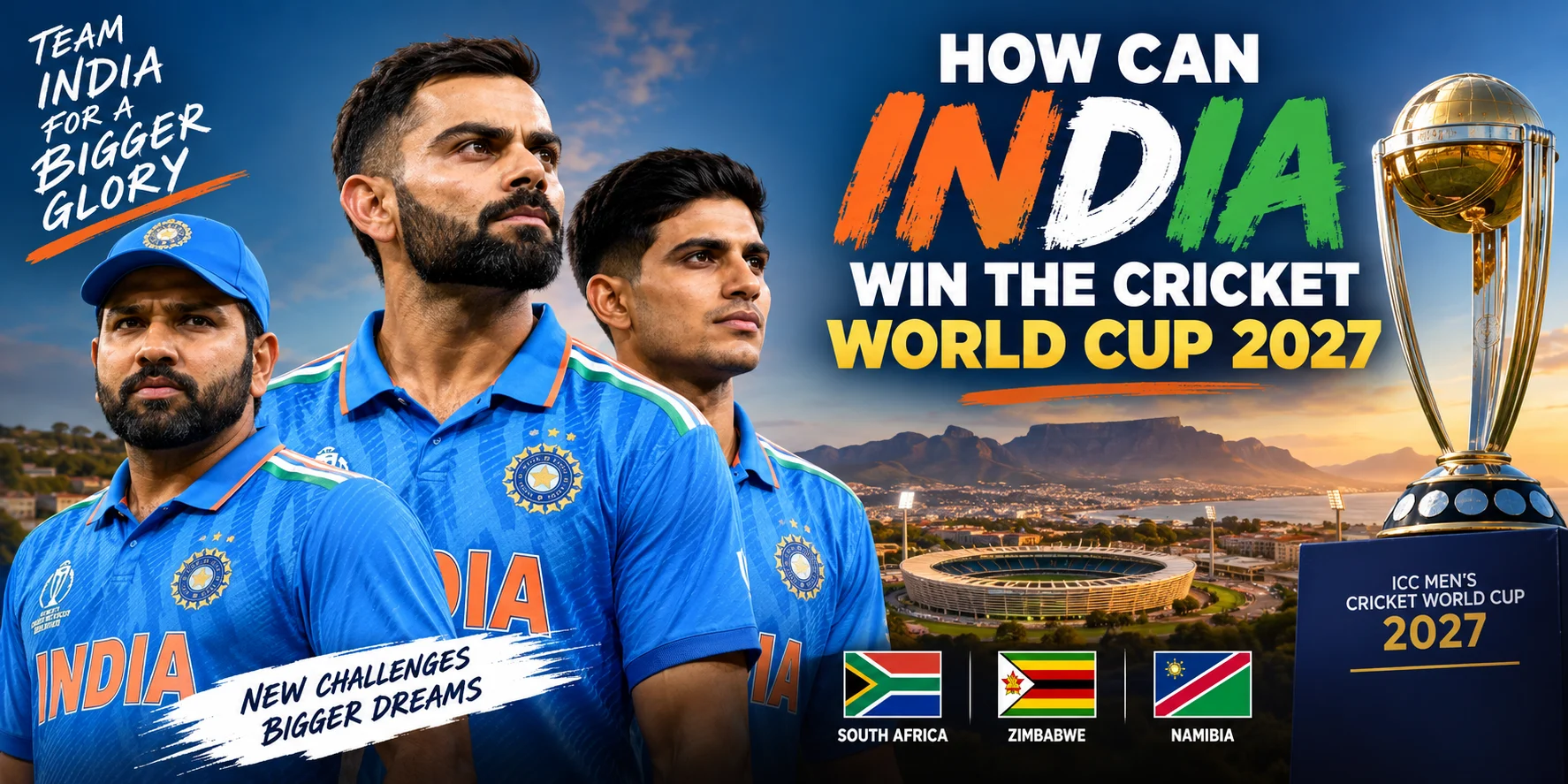
How Can India Win the Cricket World Cup 2027
India will enter the 2027 Cricket World Cup with strong recent success in white-ball cricket. India won the 2024 T20 World Cup, defended the title in 2026, and also lifted the 2025 Champions Trophy. The back-to-back T20 World Cup victories made India the first team to achieve the feat in the men’s tournament. But the 50-over World Cup will present a different challenge. So, what will India need to do to win the 2027 Cricket World Cup? Recent ODI Form Gives India Confidence India’s recent ODI performances have produced several encouraging signs. At the 2025 Champions Trophy, India remained unbeaten and defeated New Zealand in the final. The tournament also highlighted the strength of India’s key players. Shreyas Iyer was India’s leading run-scorer with 243 runs, while Virat Kohli scored 218 runs at an average of 54.50. KL Rahul contributed 140 runs and was unbeaten in three of his four innings. India’s bowling also produced match-winning performances. Mohammed Shami took nine wickets, while Varun Chakravarthy took nine wickets in only three matches, averaging just 15.11. Key Players Are Still Producing in ODIs India’s leading batters have continued to perform strongly in ODI cricket. In India’s three-match ODI series against England in July 2026, Shubman Gill scored 188 runs, while Virat Kohli and Rohit Sharma also made important contributions. Following the series, Gill was ranked No. 2, Kohli No. 3 and Rohit No. 4 in the ICC ODI batting rankings. Kohli had also returned to the No. 1 position in the ICC ODI batting rankings in January 2026, following a strong run of scores including 135, 102 and 65* against South Africa and 93 against New Zealand. The Biggest Challenge: African Conditions The 2027 World Cup will be hosted by South Africa, Zimbabwe and Namibia. India will therefore need to adapt to conditions that can be different from those encountered in home ODI cricket. A strong pace attack, reliable batting against fast bowling and the ability to select the right combination for different pitches will be important. Can India Win the 2027 World Cup? India’s recent record—2024 T20 World Cup, 2025 Champions Trophy and 2026 T20 World Cup—shows sustained success in ICC white-ball tournaments. However, the 2027 ODI World Cup will be a new challenge. Conditions in South Africa, Zimbabwe and Namibia, squad selection and performances under knockout pressure will all play an important role. India already has several proven ODI performers. If the team can combine that experience with emerging talent and adapt successfully to African conditions, it will have the opportunity to mount another strong World Cup campaign.

Why Is Celebrity Cricket League 2026 Scorecard Trending
The Celebrity Cricket League 2026 scorecard has started attracting renewed attention even though the tournament itself concluded months ago. At first glance, that may seem unusual. CCL 2026 ran from January 16 to February 1, 2026, with Karnataka Bulldozers eventually lifting the trophy after beating Bengal Tigers in the final. Yet searches around the Celebrity Cricket League 2026 scorecard are still appearing in search-demand data. So, what is driving this interest? The answer is more interesting than simply saying that fans want to know who won. The Celebrity Cricket League sits at the intersection of two enormous Indian interests: cricket and cinema. Unlike a conventional cricket tournament, CCL gives fans a reason to follow actors not only through films and entertainment news but also through match results, scorecards, player performances, team standings and memorable moments. The 2026 season added another layer to that interest. Karnataka Bulldozers won their third CCL title, Rajeev Hanu produced a match-winning final performance, Bengal Tigers reached the final after an unbeaten league campaign, and the season produced several close contests, including a Super Over. That combination makes the Celebrity Cricket League 2026 scorecard more than a simple record of runs and wickets. It has become a useful way for fans to revisit the entire tournament. What Is the Celebrity Cricket League? The Celebrity Cricket League, commonly known as CCL, is a cricket competition that brings together actors and entertainment personalities representing different regional film industries. The league began in 2011 and has developed around a simple but powerful idea: combine the popularity of Indian cinema with the excitement of cricket. CCL’s own public profile describes the competition as a meeting point between India’s entertainment and cricket audiences. The league features eight teams representing major regional film industries, creating a format where fans can support both their favourite celebrities and their regional teams. That is an important reason the Celebrity Cricket League 2026 scorecard has such a different search intent from a normal domestic cricket scorecard. A conventional cricket scorecard is generally searched for by cricket followers. A CCL scorecard can be searched by: The audience is therefore much broader. Why Is Celebrity Cricket League 2026 Scorecard Trending? There is no publicly verified statement from Google or CCL saying that one particular event caused the exact search phrase to trend in September 2026. However, the available search results show a clear pattern: publishers are continuing to create and update pages around CCL 2026 results, points tables, scorecards and tournament statistics. For example, new CCL-related content continued appearing during August and September 2026, including pages focused specifically on the CCL 2026 scorecard and points table. This gives us several strong reasons why the search term can regain attention. 1. Fans are still searching for the complete tournament record The most obvious reason is simple. People do not always search for sports information only while a match is live. After a tournament finishes, users often search for: The Celebrity Cricket League 2026 scorecard answers many of these questions from one place. This makes the keyword valuable as an evergreen sports search term. The tournament may be over, but the information does not become irrelevant. In fact, historical sports data often becomes more useful after the event because fans have time to explore it. 2. CCL 2026 Had a Strong Final Story The final itself created a major reason for people to revisit the Celebrity Cricket League 2026 scorecard. Karnataka Bulldozers defeated Bengal Tigers by six wickets in the final at SNR College Stadium in Coimbatore. Bengal Tigers were bowled out for 129. Karnataka Bulldozers then chased the target, reaching 130/4 in 16.4 overs. The official Celebrity Cricket League YouTube channel confirmed that Karnataka Bulldozers lifted their third CCL trophy after the victory. The final also contained the kind of individual performance that keeps a scorecard interesting long after the match. Rajeev Hanu scored 69 during Karnataka’s chase, helping shift the match decisively toward the Bulldozers. The official CCL highlight material specifically highlighted his attacking innings. For a fan searching later, the scorecard becomes a way to reconstruct the entire match. Who scored? Who took wickets? When did Bengal collapse? How quickly did Karnataka chase the target? Which player changed the game? A detailed scorecard answers those questions. CCL 2026 Final Scorecard at a Glance The final produced a straightforward result but an interesting match story. Team Score Result Bengal Tigers 129 all out Lost Karnataka Bulldozers 130/4 in 16.4 overs Won by 6 wickets Bengal Tigers were dismissed for 129 in 20 overs. Karnataka Bulldozers reached the target with four wickets down and 20 balls remaining. The official CCL coverage reported the final result as a six-wicket victory for Karnataka Bulldozers. The final also marked Karnataka’s third CCL championship. That matters because the Celebrity Cricket League 2026 scorecard is not simply documenting another match. It records a significant moment in the team’s history. 3. Rajeev Hanu’s Final Performance Increased Scorecard Interest One reason people return to a scorecard is because of a standout individual performance. Rajeev Hanu provided exactly that in the 2026 final. He scored 69 and attacked the Bengal bowling during the chase. CCL’s official highlight description says Hanu’s innings played a major role in Karnataka’s successful chase. The official live-score coverage also recorded Hanu reaching 69 before his dismissal during the chase. This creates additional search queries around the same match: One popular match can therefore generate an entire cluster of related searches. That is an important SEO reason why the main scorecard keyword can remain relevant long after the final ball. 4. Bengal Tigers’ Collapse Made the Final Worth Revisiting Bengal Tigers appeared capable of producing a competitive total, but their innings eventually collapsed. According to CCL’s published final report, Bengal reached 94/3 before losing five wickets for just five runs, eventually being dismissed for 129. That type of collapse makes a scorecard much more interesting. A score of 129 does not tell the whole story. The sequence behind that score does. A
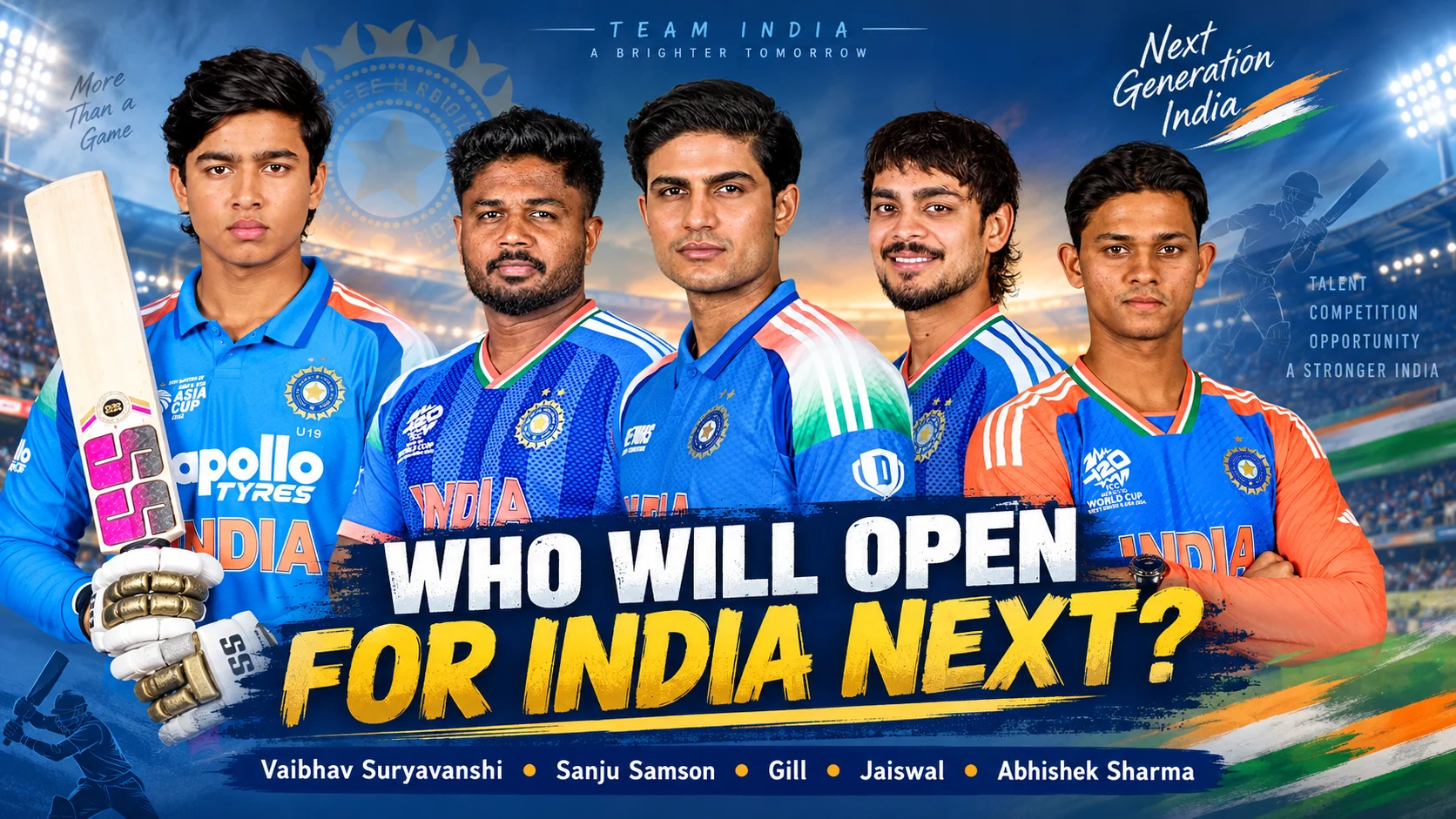
Who Will Open for India Next? Vaibhav Suryavanshi, Sanju Samson, Gill, Jaiswal and Abhishek Sharma
India’s opening-batting position has become one of the most interesting selection battles in international cricket. With several talented batters competing for limited places, the question is no longer simply about finding two players who can score runs. It is about building an opening combination that can deliver powerplay runs, handle pressure, adapt to different formats and remain reliable over the next several years. The names at the centre of this discussion include Vaibhav Suryavanshi, Sanju Samson, Abhishek Sharma, Shubman Gill, Ishan Kishan and Yashasvi Jaiswal. Each batter brings a different skill set, and the ideal combination depends on the format, opposition, pitch conditions and the team’s wider batting balance. The latest BCCI squad announcements also show why this debate has become important. India named Abhishek Sharma, Vaibhav Suryavanshi, Sanju Samson and Ishan Kishan in the T20I squad for the Afghanistan series, while Shubman Gill and Yashasvi Jaiswal were included in the Test squad. The BCCI also named Gill as ODI captain for the England series in June 2026. So, who will open for India next? The answer depends on which format India is preparing for and how the selectors want to balance established performers with emerging talent. India’s Opening Competition Explained The opening position carries special importance in modern cricket. The first two batters face the new ball, set the tempo and influence how the middle order approaches the innings. In T20 cricket, an opener may need to attack from the first over. In ODIs, the same player must manage the powerplay while preserving wickets for the middle overs. Test cricket demands another level of patience, technique and concentration. This is why India cannot select openers on reputation alone. The team needs players who can perform specific roles. For example, one opener may be naturally aggressive, while the other may be better at building an innings. In another combination, both openers may attack from the beginning. The right choice depends on the team’s overall strategy. India’s recent T20I selections demonstrate this flexibility. The BCCI named Abhishek Sharma, Sanju Samson, Ishan Kishan and Vaibhav Suryavanshi in the Afghanistan squad, giving the team several options for the top order. Vaibhav Suryavanshi: The Young Opener Changing the Conversation Vaibhav Suryavanshi has become one of the most talked-about young batting prospects in Indian cricket. His inclusion in India’s T20I squads in 2026 has brought a new dimension to the opening debate. The BCCI included Suryavanshi in the senior men’s T20I squads for the Ireland and England series in June 2026. He was also named in the squad for the Afghanistan T20I series. His selection is significant because it shows that India is willing to consider young talent for the senior team. However, a squad selection does not automatically mean a player has secured a permanent place in the playing XI. Suryavanshi’s development should be viewed as a long-term process. Young batters need opportunities to understand international bowling, travel demands, match pressure and the tactical differences between domestic and international cricket. Why Suryavanshi Could Be Important for India The biggest attraction of a young attacking opener is the possibility of building a long-term batting combination. If Suryavanshi develops into a consistent international performer, India could have an additional option at the top of the order for future T20I campaigns. His presence also creates healthy competition for established players. But there is an important difference between potential and proven international performance. India must give him opportunities according to his readiness rather than treating every selection as a requirement to play. The Afghanistan T20I squad included Suryavanshi alongside Abhishek Sharma, Sanju Samson and Ishan Kishan. This gives the team several ways to structure the opening pair and No. 3 position. Sanju Samson: Experience and T20 Opening Ability Sanju Samson remains an important name in India’s T20I opening discussion. The ICC’s analysis of India’s 2026 T20 World Cup squad highlighted Samson’s strong record as an opener after the 2024 T20 World Cup. He scored 454 runs in 13 innings during that period, including three centuries, while opening at an average of 34.92 and a strike rate of 181.60. These figures help explain why Samson has been considered for a regular role at the top of the order. His ability to attack pace bowling and score quickly makes him valuable in the powerplay. Samson also provides wicketkeeping cover, which can influence the team’s overall combination. India may be able to use a wicketkeeper at the top of the order while selecting additional bowling or all-round options elsewhere. Why Samson’s Role Matters A successful opening combination needs continuity. Players must understand each other’s batting patterns, running between wickets and approach to the first six overs. Samson’s experience gives India an option that has already been tested at international level. However, his place in the XI still depends on current form, team balance and the specific series. The selection debate is therefore not simply about choosing the most exciting player. It is about deciding which combination gives India the best structure for the match. Abhishek Sharma: India’s Powerplay Specialist Abhishek Sharma has established himself as one of India’s most exciting T20 opening options. His aggressive batting style is suited to the demands of modern T20 cricket, where teams aim to score quickly during the powerplay. The ICC identified Abhishek as a key attacking opener in India’s T20I plans and noted his strike rate of 188.02 in the format during its 2026 World Cup squad analysis. Abhishek’s value is not limited to boundary hitting. He also offers left-handed batting, which can create a different challenge for opposition bowlers. A left-right opening combination can force bowling teams to adjust their field placements and bowling plans. It can also help the batting side avoid allowing one bowler to settle into a comfortable rhythm. The Ideal Partner for Abhishek Abhishek’s aggressive approach makes the choice of his opening partner particularly important. A partner such as Samson or Suryavanshi can provide another attacking option. Ishan Kishan offers a similar left-handed attacking profile, while Gill brings
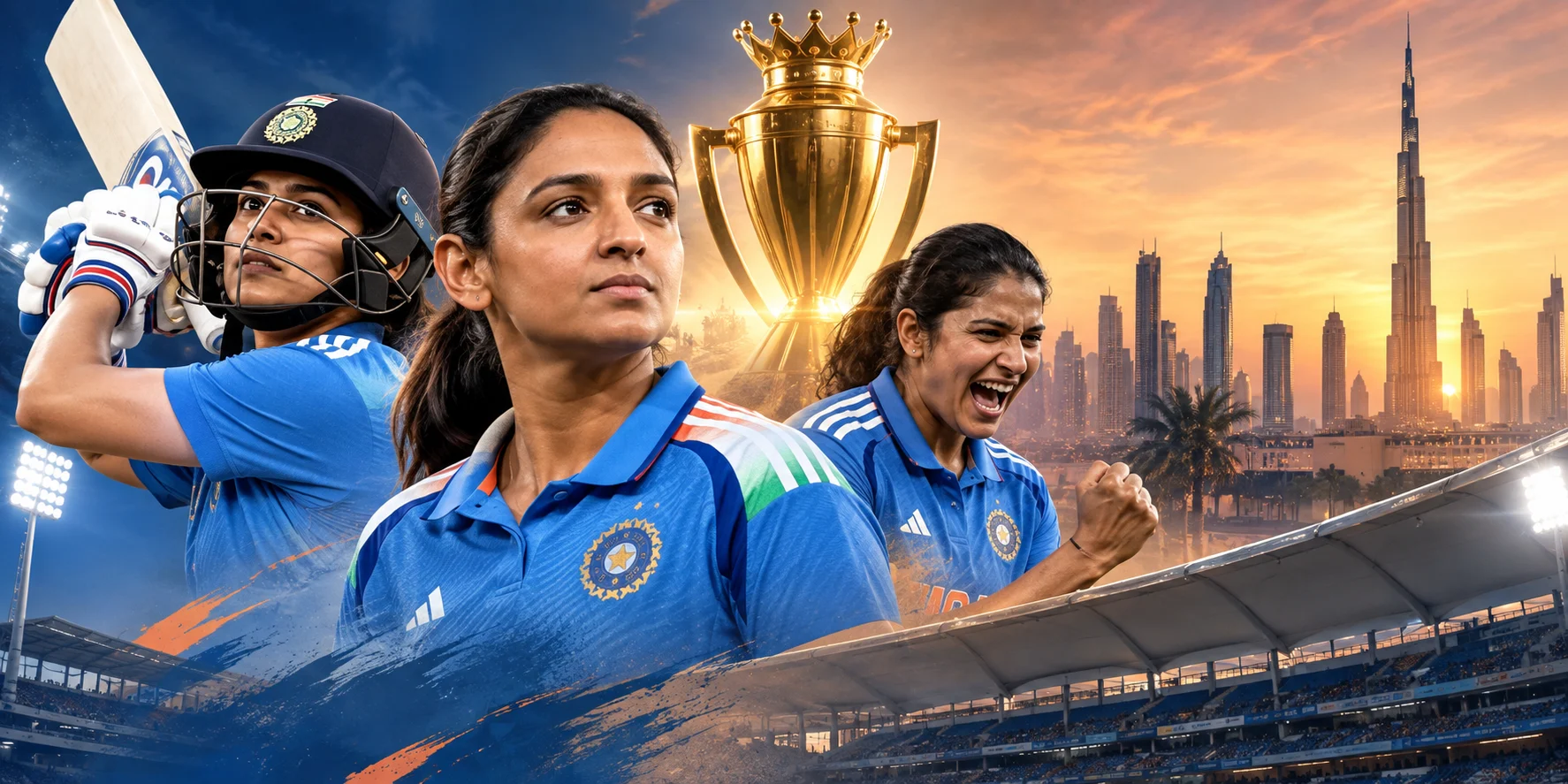
Women’s Asia Cup 2026: Knockout Picture, Match Schedule & Pitch Dynamics in Dubai
The Women’s Asia Cup 2026 semi-final schedule is now taking shape, and India Women have given themselves the best possible platform for the knockout stage. Three matches. Three wins. Six points. A remarkable net run rate of +5.471. India have not simply qualified for the semi-finals; they have done it with the kind of performances that make the rest of the tournament sit up and take notice. Their campaign in Dubai has combined aggressive top-order batting, disciplined spin bowling and enough depth to handle difficult moments. The biggest question now is no longer whether India can reach the semi-finals. That job is done. The question is whether anyone can stop them from reaching the final. The answer will begin to emerge on 10 September, when the first semi-final is played at the Dubai International Stadium. India finished top of Group A, meaning they will face the second-placed team from Group B. Sri Lanka have already secured the top position in Group B, while the second qualification spot is being decided between Bangladesh and the UAE. The official tournament structure has eight teams divided into two groups of four, with the top two teams from each group advancing to the semi-finals. The final is scheduled for 13 September in Dubai. For India, the road ahead looks promising. But knockout cricket is different. One bad powerplay. One poor batting collapse. One spell of brilliant spin from the opposition. That is enough to change everything. India Women’s Asia Cup 2026 Campaign So Far India entered the tournament as one of the strongest sides on paper, and their performances have largely matched those expectations. The team opened its campaign against Thailand on 30 August and produced a 94-run victory. India posted 159/9 before dismissing Thailand for 65. Shafali Verma led the batting effort with a powerful 64 from 36 balls, including eight fours and three sixes. The second match was even more emphatic. Against Hong Kong, China, India produced one of the tournament’s most destructive batting performances. Smriti Mandhana smashed 124 from 64 balls, including 14 fours and seven sixes, as India posted 193/5. Hong Kong were then restricted to 56, giving India a massive 137-run victory. Mandhana’s innings was more than just a match-winning hundred. It was a historic performance. She moved past Mithali Raj to become the leading run-scorer in women’s international cricket, reaching 10,880 runs across formats. She also moved past Meg Lanning for the most international centuries in women’s cricket, with 18 hundreds. Then came the biggest Group A fixture. India faced Pakistan on 5 September and once again showed why their bowling attack is becoming one of their biggest strengths. Pakistan were bowled out for just 55, their lowest-ever T20I total. India chased the target comfortably, winning by seven wickets with plenty of overs remaining. Shafali Verma also crossed the 3,000-run mark in T20Is during the chase. That victory completed India’s unbeaten Group A campaign. India Women Group A Record Team Matches Wins Losses Points Net Run Rate India Women 3 3 0 6 +5.471 Pakistan Women 3 2 1 4 +0.927 Thailand Women 3 1 2 2 -2.050 Hong Kong, China Women 3 0 3 0 -3.583 The latest ACC standings confirm India at the top of Group A with three wins from three matches and six points. That huge net run rate could become important if the tournament enters a complicated qualification scenario, but India have already done enough to finish first. Women’s Asia Cup 2026 Semi-Final Schedule The Women’s Asia Cup 2026 semi-final schedule has two knockout matches followed by the final. The first semi-final is scheduled for 10 September, while the second semi-final will be played on 11 September. Both are at the Dubai International Stadium. Date Match Venue Time 10 September Semi-final 1: A1 vs B2 Dubai International Stadium 6:30 PM UAE / 8:00 PM IST 11 September Semi-final 2: B1 vs A2 Dubai International Stadium 6:30 PM UAE / 8:00 PM IST 13 September Final Dubai International Stadium 6:30 PM UAE / 8:00 PM IST The Emirates Cricket Board’s official tournament information lists the first semi-final as A1 vs B2 and the second as B1 vs A2, with the final on 13 September. For India, the equation is therefore simple: India Women = Group A1 So India will play: India Women vs Group B2 The exact opponent depends on the final Group B result. Who Can India Women Face in the Semi-Final? This is where the knockout picture gets interesting. Sri Lanka have already finished at the top of Group B after winning all three of their matches. Their victory over Bangladesh on 6 September confirmed their semi-final place. The battle for second place is between: Bangladesh currently have two points from two matches, while the UAE also have two points from two matches. Their final Group B match is scheduled for 8 September. That means India’s semi-final opponent will be decided after the Bangladesh-UAE match. The likely knockout structure 10 September — Semi-final 1 India Women vs Group B runner-up 11 September — Semi-final 2 Sri Lanka Women vs Pakistan Women Pakistan have already secured second place in Group A after beating Hong Kong, China by 72 runs on 7 September. Nashra Sundhu produced outstanding figures of 6/7 in that match. So the second semi-final is set: Sri Lanka Women vs Pakistan Women The first semi-final remains: India Women vs Bangladesh/UAE That is the key part of the Women’s Asia Cup 2026 semi-final schedule to watch. IND-W Points Table: Why India’s No. 1 Finish Matters The IND-W points table position is more important than simply having six points. Finishing first in Group A gives India the Group B runner-up rather than the group winner. On paper, that gives India a more favourable route to the final. Sri Lanka are the defending champions and have also gone unbeaten through their Group B campaign. Avoiding them until the final could therefore be a significant advantage. India’s position in the IND-W points table also
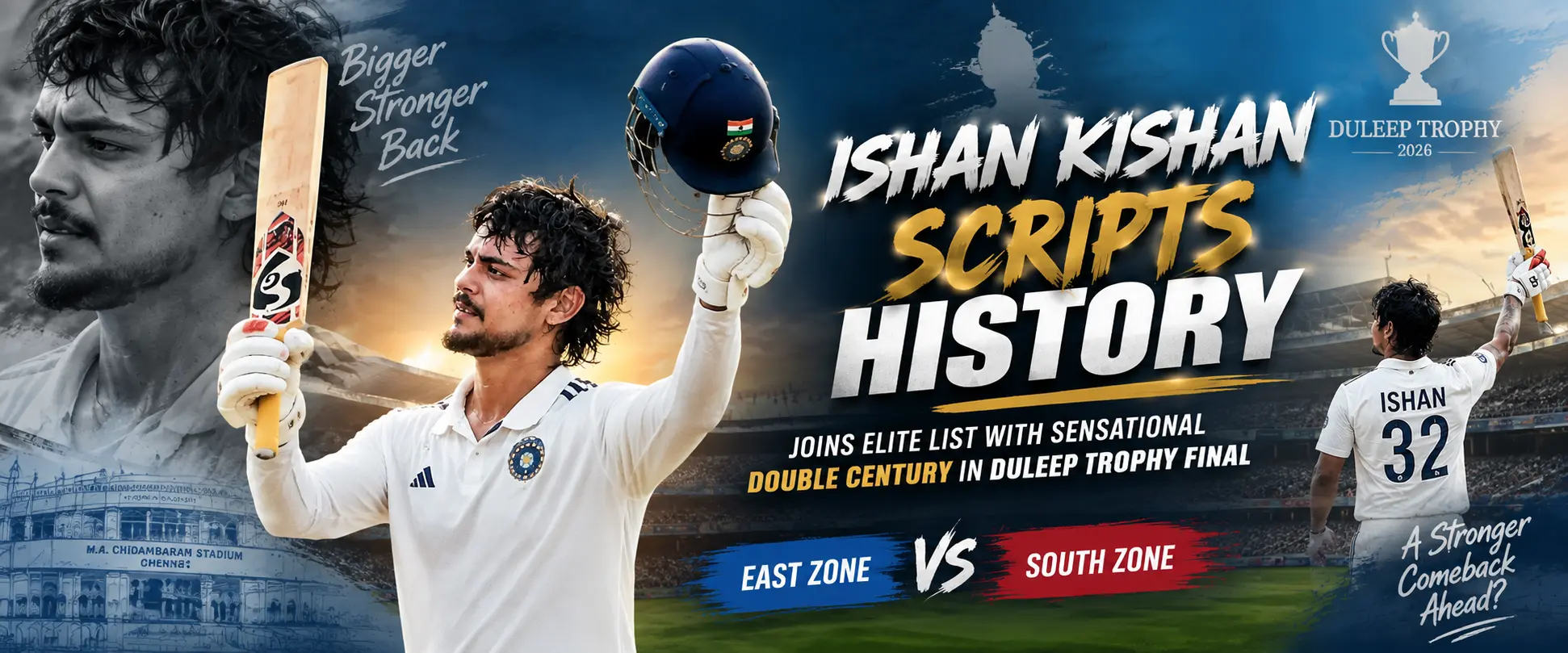
Ishan Kishan’s Historic Double Hundred in the Duleep Trophy Final
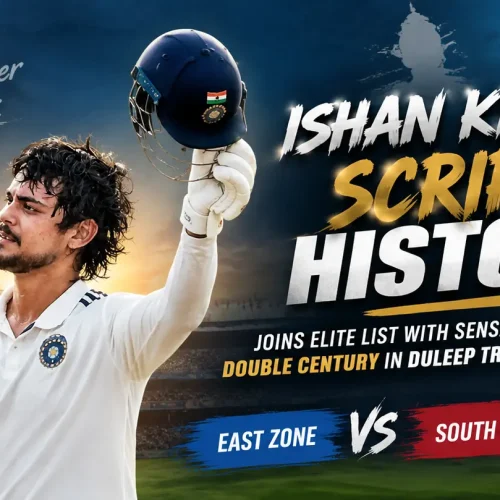
Ishan Kishan has turned the Duleep Trophy 2026 final into his own stage. The East Zone captain produced one of the biggest knocks of his domestic career at the M.A. Chidambaram Stadium in Chennai, converting his overnight century into a magnificent double century against South Zone on Day 2 of the final. Kishan began the second day unbeaten on 111. What followed was a display of patience, clean strokeplay and controlled aggression. He crossed 150, kept South Zone’s bowlers under pressure and eventually reached the 200-run landmark with a boundary off Devdutt Padikkal. In doing so, Kishan entered an elite group of batters to score a double century in a Duleep Trophy final. Current reports have described him as only the fifth batter to reach the landmark in the final, joining names such as Raman Lamba, Anshuman Gaekwad, Cheteshwar Pujara and Yashasvi Jaiswal. But the significance of this innings goes far beyond one number. For East Zone, it has placed the team in a position of enormous strength. For Kishan, it is another reminder of what he can produce when given responsibility and time at the crease. And for Indian cricket, the knock raises a much bigger question: Could this be the innings that strengthens Ishan Kishan’s case for another serious push towards the national setup? Ishan Kishan Double Century: The Story Behind a Special Knock The stage could hardly have been bigger in domestic cricket. The Duleep Trophy final brings together some of India’s strongest domestic players, including established international names, emerging youngsters and cricketers trying to force their way into the national conversation. BCCI moved the 2026-27 Duleep Trophy final from Bengaluru to the M.A. Chidambaram Stadium in Chennai specifically to allow spectators to attend the marquee domestic fixture. The final is scheduled from September 6 to 10, making the Chepauk setting an appropriate backdrop for a major domestic performance. East Zone entered the tournament with Kishan as captain and wicketkeeper. BCCI’s squad announcement also highlighted the blend of experience and youth in the side, with players such as Mohammed Shami, Mukesh Kumar, Abhimanyu Easwaran, Vaibhav Sooryavanshi and Kumar Kushagra alongside Kishan. That leadership responsibility matters. Kishan was not simply another batter in the XI. He was the captain. He was the wicketkeeper. He was one of the senior figures in the batting order. And when East Zone needed its leader to stand up in the biggest match of the tournament, he did exactly that. Day 1: Kishan Builds the Foundation The double century did not arrive out of nowhere. On Day 1, Kishan had already done the hard work of establishing himself at the crease. East Zone finished the opening day on 385/4, with Kishan unbeaten on 111 and Kumar Kushagra unbeaten on 63. The pair had added 144 runs during the closing stages, giving East Zone a powerful platform going into Day 2. That was important because finals are often won by players who understand the value of time. There is always pressure to score quickly. There is always the temptation to force the game. But Kishan resisted that trap. He started with control. Then came the acceleration. By the time he returned on Day 2, South Zone had a major problem. Their bowlers were no longer trying to dismiss a settled batter approaching a century. They were trying to break down a player who had already spent hours understanding the conditions. That difference proved decisive. How Ishan Kishan Reached His Double Century Kishan completed his double century in the second session of Day 2. The landmark came from a boundary off Devdutt Padikkal, taking Kishan to 200 from 270 deliveries according to multiple reports. The celebration was fitting for the occasion. Kishan removed his helmet as his teammates applauded from the dressing room. It was not just another hundred. It was a landmark innings in a major domestic final. His approach throughout the innings was a mixture of traditional first-class batting and the attacking instincts that have defined his career. He did not simply block his way to 200. He put the bowlers under pressure. He found boundaries when the opportunity came. He rotated the strike. He waited for loose deliveries. Most importantly, he refused to allow the South Zone attack to dictate the terms of the contest. That is perhaps the most impressive part of the innings. Kishan played aggressively without making aggression look reckless. The Numbers Behind Ishan Kishan’s Double Century The statistics tell their own story. Kishan reached 200 from 270 balls, with reports crediting him with more than two dozen boundaries and two sixes at the time he crossed the landmark. He later moved beyond the double century and reached 250, eventually retiring hurt after scoring 250 from 301 deliveries, according to current reports. His innings included 27 fours and seven sixes. That makes the knock even more remarkable. A batter can reach 200 through a marathon innings built almost entirely around survival. Kishan’s effort was different. He maintained a scoring threat throughout and eventually pushed his total to 250. For East Zone, every additional run increased the pressure on South Zone. For Kishan, every run strengthened the argument that he belongs in conversations far beyond domestic cricket. Ishan Kishan Joins an Elite Duleep Trophy List Scoring a double century in any first-class match is difficult. Doing it in a final is another matter altogether. The Duleep Trophy has a long history of producing outstanding individual performances, and Kishan’s name now sits alongside some of Indian cricket’s most respected domestic batters. The current list cited in reports includes: Batter Score Opposition Season Raman Lamba 320 West Zone 1987-88 Anshuman Gaekwad 216 North Zone 1987-88 Cheteshwar Pujara 256* India Red 2016-17 Yashasvi Jaiswal 209* South Zone 2022-23 Ishan Kishan 250 South Zone 2026-27 There is some variation in historical record lists because older Duleep Trophy finals and team formats have been classified differently by different statistical sources. Some broader lists include additional performances, meaning the exact all-time ranking can vary depending
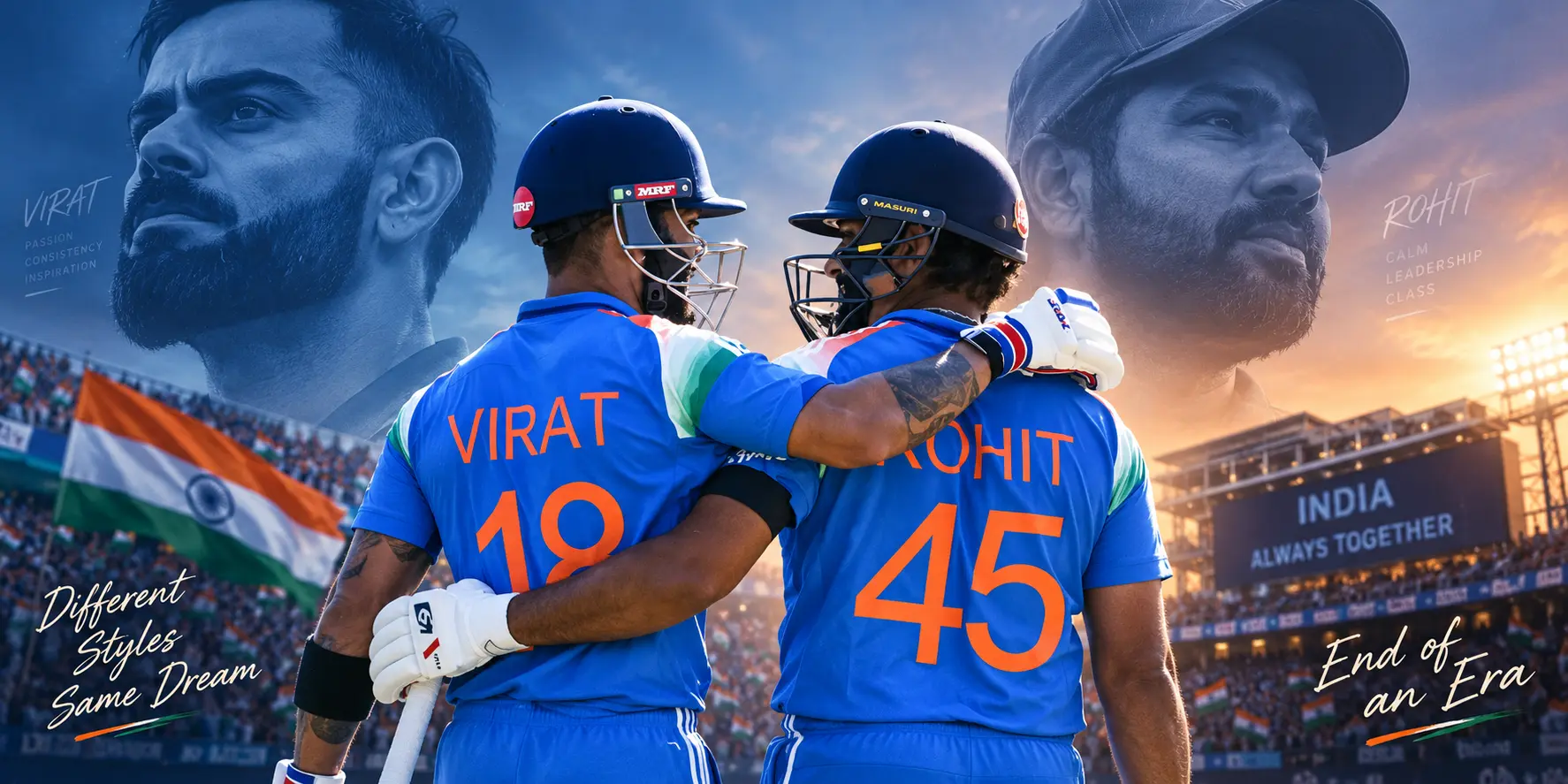
Rohit Sharma and Virat Kohli Retirement The End of an Era in Indian Cricket
There was a time when an Indian cricket match could feel different the moment Rohit Sharma and Virat Kohli walked onto the field. One could destroy a bowling attack in the first 15 overs. The other could take a chase deep into the final overs and make an impossible target look ordinary. For more than a decade, Rohit Sharma and Virat Kohli have been two of the biggest names in Indian cricket. Their careers have produced World Cup triumphs, record-breaking innings, unforgettable partnerships and countless moments that became part of Indian cricket folklore. But now, the conversation around their retirement has entered a new and very different phase. And there is an important clarification to make at the beginning. As of September 4, 2026, neither Rohit Sharma nor Virat Kohli has retired from ODI cricket. Both have already stepped away from Test cricket and T20 internationals, but the 50-over format remains open to them. The BCCI included both players in India’s ODI squad for the 2026 England tour, and both remain part of the discussion surrounding India’s plans for the 2027 ODI World Cup. In fact, the latest developments have made the retirement story even more interesting. Rohit’s future looked uncertain during the England ODI series. Then he answered the noise with a magnificent century at Lord’s. BCCI officials have since publicly rejected the idea that his ODI retirement is imminent. Kohli, meanwhile, has been much clearer about his own intentions. In May 2026, he said he remains committed to the possibility of playing the 2027 World Cup, provided he continues to add value to the Indian team. The ICC reported that he was fully committed to the tournament. So the real story is not simply Rohit Sharma and Virat Kohli retirement. It is about how long this legendary partnership can continue, what happens when it finally ends, and whether the two veterans can finish their ODI careers with one more World Cup campaign. The End of an Era Has Already Started Even though Rohit and Kohli have not retired from ODIs, the transition has already begun. Both have left Test cricket. Rohit announced his Test retirement in May 2025 after 67 matches, 4,301 runs and 12 centuries. The BCCI confirmed at the time that he would continue playing ODIs. Just days later, Kohli announced his Test retirement. He finished with 9,230 runs from 123 Tests, including 30 centuries. Both had already retired from T20 internationals after India’s 2024 T20 World Cup triumph. That means ODI cricket is now the final international format in which the two legends can represent India. That makes every ODI appearance more meaningful. There is no longer a Test series waiting around the corner. There is no T20 World Cup campaign ahead for them. There is one format left. And one major tournament that has become the obvious target. The 2027 ODI World Cup. Why the 2027 World Cup Has Become So Important The 2027 World Cup is scheduled to be played in South Africa, Zimbabwe and Namibia. For Rohit and Kohli, it could represent one final opportunity to play together in a 50-over World Cup. Kohli has already made his position relatively clear. The ICC reported in May that he was preparing with the 2027 World Cup in mind and said that representing India at a World Cup remains something he wants to do. Shubman Gill has also indicated that Kohli is involved in India’s planning for the tournament. That is a significant development. Kohli is no longer India’s captain. Gill now leads the side. Yet Kohli’s experience is still valuable enough for the current leadership group to seek his input. This tells us something about his role. He is not simply being selected because of his name. India’s current leadership appears to see value in what he can bring to the team beyond his batting. Rohit Sharma’s Retirement Situation Is More Complicated Rohit’s situation has been much more uncertain. The speculation became intense during India’s 2026 England ODI series. Before the Lord’s match, reports suggested that the third ODI could potentially be his final appearance for India. The discussion was fuelled by his age, recent form and the fact that India is already building towards the 2027 World Cup. Then Rohit did what Rohit has done throughout his career. He answered with the bat. At Lord’s on July 19, 2026, Rohit scored 138 from 110 balls, including 17 fours and five sixes. It was his 34th ODI century and came while India were chasing England’s massive 387 for 3. India eventually lost by 27 runs. But Rohit’s innings changed the conversation. Suddenly, the discussion was no longer only about whether he was finished. People were asking whether India could afford to leave him out of the 2027 World Cup. That is quite a turnaround. Rohit Did More Than Score a Century at Lord’s The Lord’s innings had a bigger meaning. Rohit entered the match under enormous scrutiny. He had gone through a lean period in ODI cricket, and questions about his future were becoming louder. Instead of responding publicly to every report, he responded with performance. His century came in a chase of 388. It was also his first ODI hundred at Lord’s. The ICC described the innings as a response to the criticism surrounding his form, while Rohit himself focused on the team’s performance rather than his own milestone. That is classic Rohit. Let the bat do the talking. And the timing could hardly have been better. BCCI Has Now Pushed Back Against Retirement Reports This is one of the biggest recent updates. BCCI secretary Devajit Saikia has publicly pushed back against speculation about Rohit’s retirement. The latest reports on September 4, 2026, say the BCCI has confirmed that Rohit remains in contention for the 2027 World Cup. There has been no official retirement announcement from the player. That is important because retirement decisions ultimately belong to the player. Selection discussions can happen. Media reports can circulate. Experts can debate. Fans
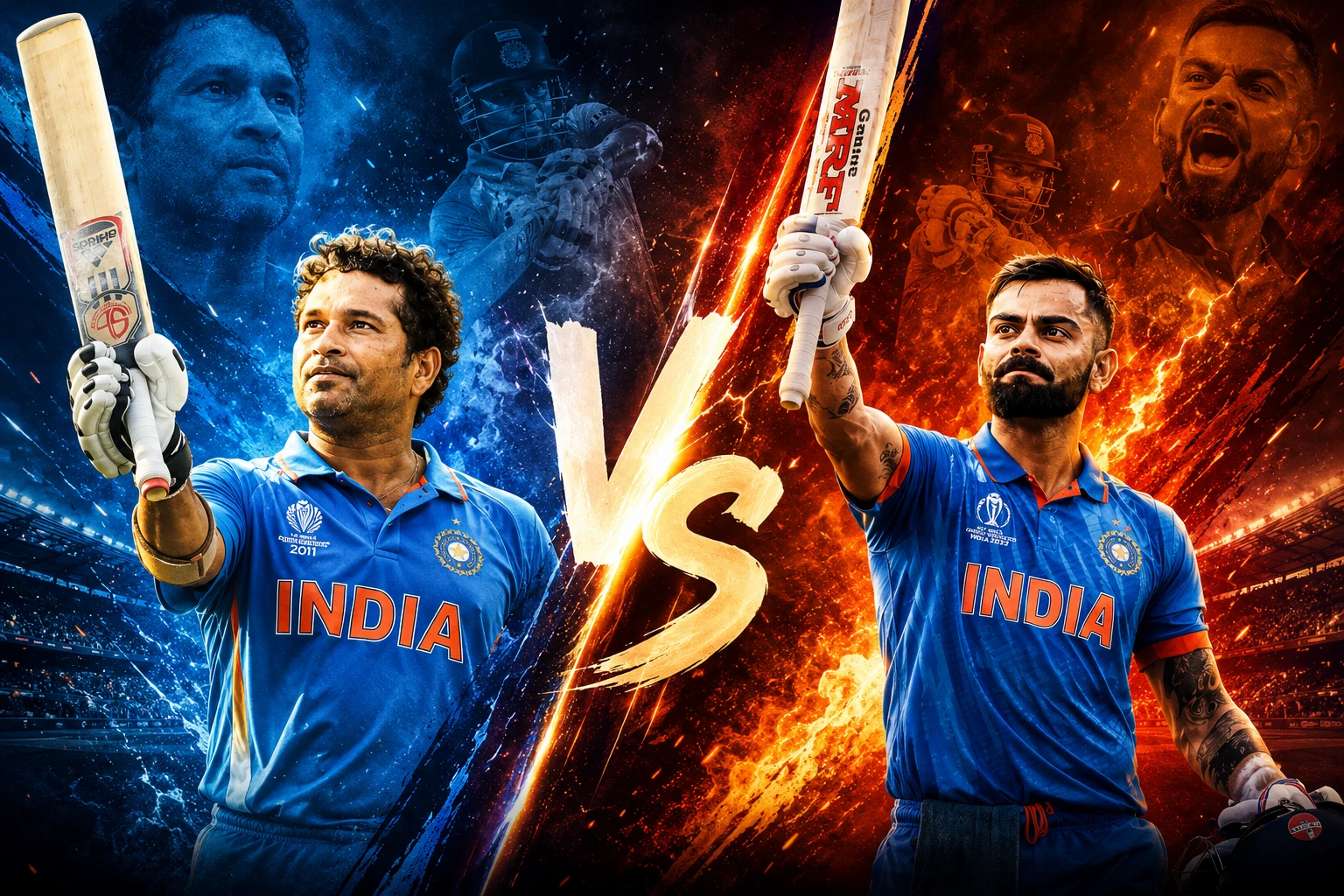
Sachin Tendulkar vs Virat Kohli The Ultimate Battle of Indian Cricket Legends
Indian cricket has produced countless great batsmen, but very few have carried the weight of an entire generation on their shoulders. Sachin Tendulkar did it for more than two decades. Virat Kohli took over that responsibility in a completely different era and built a legacy of his own. That is why Sachin Tendulkar vs Virat Kohli is not simply a comparison of runs, centuries or averages. It is a comparison between two eras of cricket. Sachin played through a period when batting was often a contest of patience, technique and survival against some of the most feared bowlers in cricket history. Kohli developed his game in an era dominated by data, advanced fitness, better bats, DRS, sophisticated coaching, shorter formats and aggressive batting strategies. Both are extraordinary. But the conditions under which they achieved their numbers were not identical. Sachin’s generation demanded a different kind of toughness. Kohli’s generation demands a different kind of adaptability. So when the question is asked about Sachin Tendulkar vs Virat Kohli, the fairest approach is not to simply put their career statistics next to each other and declare a winner. We need to understand the cricket they actually played. Sachin Tendulkar vs Virat Kohli Is Really a Battle Between Two Eras The first thing to understand is that Sachin and Kohli belong to different cricketing worlds. Sachin Tendulkar made his international debut in 1989 as a 16-year-old and finished his international career in 2013. The ICC records him with 15,921 Test runs, 18,426 ODI runs and 100 international centuries. He also became the first player to play 200 Tests and the first to score a men’s ODI double century. Virat Kohli’s international career began in the late 2000s. He went on to become one of the defining batsmen of the modern generation and retired from Test cricket in 2025 with 9,230 runs from 123 Tests and 30 Test centuries. Looking only at these numbers can make the comparison appear straightforward. It is not. Sachin’s career lasted longer at the highest level, while Kohli’s career belongs to a period in which cricket has become considerably more technology-driven and format-heavy. The game itself changed. And that matters. The Sachin Tendulkar Era Was a Different Cricketing Battlefield To understand Sachin’s greatness, you have to look at the bowlers he regularly faced. The 1990s and early 2000s featured an extraordinary collection of fast bowlers and spinners. Wasim Akram. Waqar Younis. Glenn McGrath. Curtly Ambrose. Courtney Walsh. Allan Donald. Shane Warne. Muttiah Muralitharan. Anil Kumble. Chaminda Vaas. These were not ordinary international bowlers. They were match winners. The ICC’s historical rankings from the 1996 World Cup period provide a good snapshot of the bowling strength of that era. Curtly Ambrose was ranked No. 1, followed by Shane Warne, Wasim Akram, Glenn McGrath and Anil Kumble, with Chaminda Vaas and Courtney Walsh also among the leading bowlers. That list tells its own story. A batsman could walk out to face one of the greatest fast bowlers in history and then potentially encounter another world-class bowler after a few overs. Sachin did this repeatedly. And he did it without many of the technological protections modern batsmen have today. There Was No DRS to Correct a Bad Decision This is one of the biggest differences between the two eras. Today, if a batsman is given out LBW and believes the decision is wrong, his team can request a review. Ball tracking can examine the projected path of the delivery. UltraEdge or other approved sound-based technology can help determine whether there was an edge. Replays can provide additional evidence. The ICC describes DRS as a technology-based process that allows umpires and players to use technology when reviewing decisions. But Sachin spent the majority of his career without this safety net. The first international trials of a player referral system took place in the India vs Sri Lanka series in 2008, while the DRS officially went into operation in 2009. That means a substantial part of Sachin’s career was played under a system where an incorrect on-field decision could simply end an innings. No review. No ball tracking. No modern edge detection. No opportunity for the batsman to challenge the call. That does not mean every dismissal Sachin suffered was wrong. It would be unfair to make that claim without evidence. But it does mean that the possibility of an incorrect decision had to be accepted as part of the game. Modern batsmen have a mechanism to challenge some of those decisions. Sachin often did not. That is an important part of the Sachin Tendulkar vs Virat Kohli debate. Technology Has Changed the Way Batting Works Modern cricket is heavily influenced by technology. A batsman today can study thousands of deliveries from an opponent before facing him. Coaches can break down release points. Analysts can identify scoring areas. Teams can examine dismissal patterns. Batsmen can prepare for specific bowlers with detailed video analysis. During a match, DRS can potentially correct an incorrect decision. The ICC has also introduced technologies such as ball tracking, edge detection, infrared cameras and other systems designed to improve decision-making. This does not make modern batsmen less talented. Far from it. It simply means the preparation available to them is far more advanced. Kohli grew up in this environment. He became a product of modern cricket without becoming dependent on it. His preparation, fitness, discipline and ability to understand situations made him one of the most successful batsmen of his generation. But when we compare him with Sachin, we have to remember that Sachin did not have access to the same level of information. Modern Cricket Has Also Created More Batting Opportunities There is another side to the argument. Modern cricket has become increasingly batting-friendly in several ways, especially in white-ball cricket. Powerplays restrict where fielders can stand. Batters understand scoring zones better than ever. Bats are highly advanced. Training methods are more specialised. Fitness standards have improved dramatically. Video analysis is routine. Shorter formats have created players who
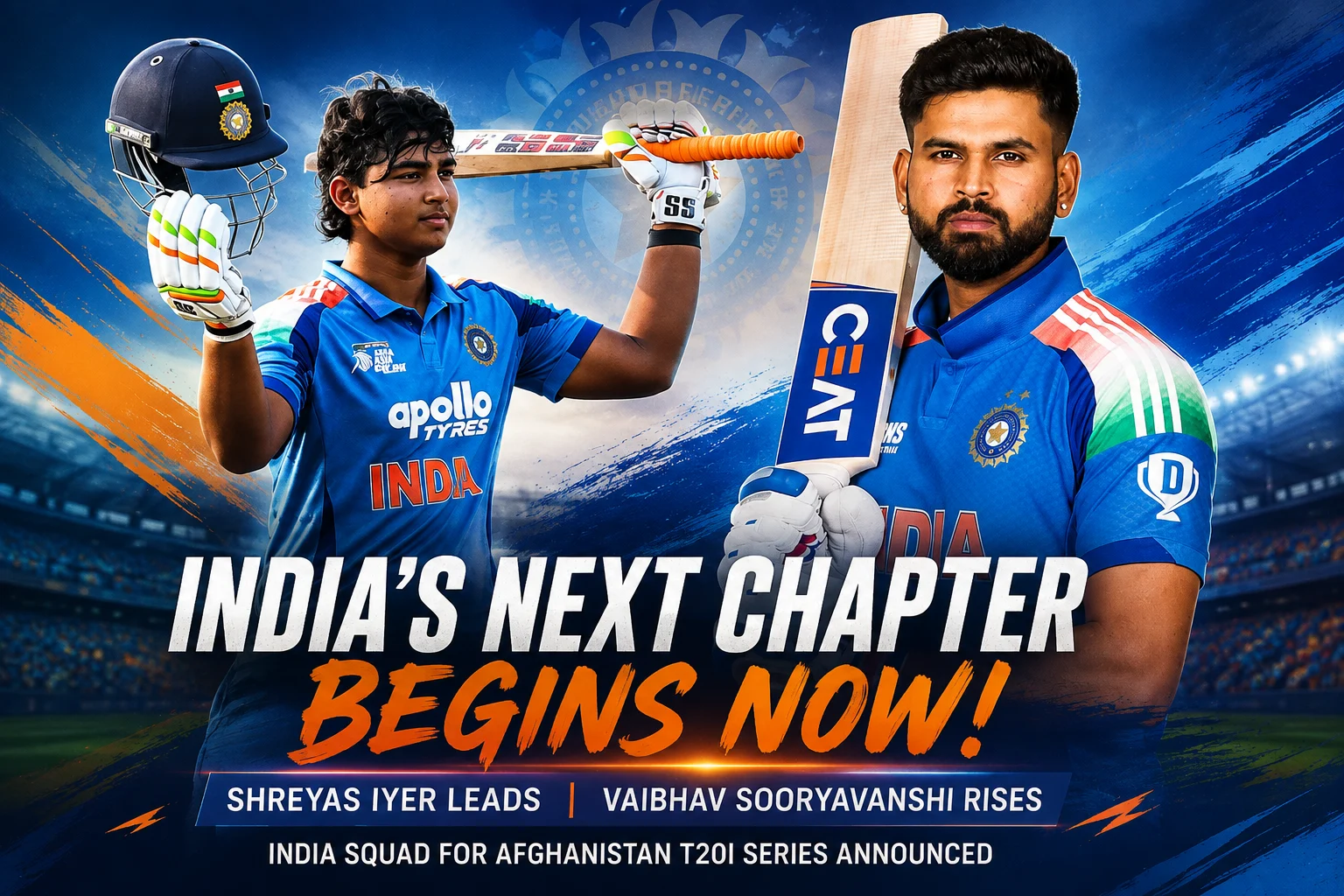
India Squad vs Afghanistan T20Is: Shreyas Iyer Named Captain, Vaibhav Sooryavanshi Earns Call-Up
India’s next T20I assignment will carry more significance than the three-match schedule might suggest. The Board of Control for Cricket in India (BCCI) has announced a 15-member squad for the upcoming three-match T20I series against Afghanistan, with Shreyas Iyer as captain and Tilak Varma as vice-captain. Teenager Vaibhav Sooryavanshi has also been included, while Jasprit Bumrah, Nitish Kumar Reddy, Washington Sundar and Harshit Rana have been selected subject to fitness clearance. The three matches are scheduled for September 13, 15 and 17 at the Arun Jaitley Cricket Stadium in Delhi. The selection has immediately created two separate conversations. The first is about the future of India’s T20I leadership and batting core. The second is about fitness management. India are not simply selecting their strongest possible XI. They are also trying to manage a squad through a long international calendar, injuries, rehabilitation and the need to develop players who could become important over the next few years. That makes this Afghanistan series an important checkpoint. India Squad for Afghanistan T20I Series: Full List The BCCI’s official 15-member squad is: *Subject to fitness clearance. This is the exact squad announced by the BCCI on September 1, 2026. The balance is notable. There is experience in the form of Bumrah, Axar Patel, Washington Sundar, Ishan Kishan, Sanju Samson and Shreyas Iyer. There is established T20 quality in Varun Chakaravarthy, Ravi Bishnoi, Arshdeep Singh and Abhishek Sharma. And there is a strong youth element through Vaibhav Sooryavanshi and the continued development of players such as Tilak Varma and Nitish Kumar Reddy. It is therefore not a purely experimental squad. It is a mixture of present strength and future planning. Shreyas Iyer’s Captaincy Enters Another Important Phase The biggest leadership story is Shreyas Iyer. Iyer was appointed India’s T20I captain earlier in 2026, replacing Suryakumar Yadav following India’s successful T20 World Cup campaign. Tilak Varma was appointed his deputy. The BCCI has now retained the same leadership combination for Afghanistan. That matters because captaincy is not only about winning individual matches. A new captain needs time to develop a playing philosophy, understand his preferred combinations and build relationships with players around him. The Afghanistan series provides three matches in five days. That gives Iyer an opportunity to test combinations while still operating in a competitive international environment. His biggest challenge will be managing resources. India have several players capable of performing multiple roles. Abhishek Sharma can provide explosive batting and bowling options. Axar Patel and Washington Sundar can influence games with both bat and ball. Shivam Dube adds power in the middle order. Tilak Varma provides another flexible batting option. The captain therefore has plenty of tools. The difficult part is choosing when to use them. Why Vaibhav Sooryavanshi’s Selection Matters Perhaps the most exciting name in the squad is Vaibhav Sooryavanshi. His selection is not completely unexpected. The young batter had already entered India’s wider T20 plans during 2026. He was included in India’s T20I squads for the Ireland and England assignments and subsequently featured in India’s T20I squad for Zimbabwe. His continued presence shows something important about India’s selection strategy. The selectors are not treating youth selection as a one-off experiment. They appear to be giving young players exposure around the senior group. That is a better way to develop international cricketers. A teenager does not necessarily need to be thrown into every match immediately. Sometimes simply being around an international squad, training with senior players, learning preparation routines and understanding the demands of international cricket can be valuable. For Sooryavanshi, the Afghanistan series could therefore be about much more than whether he makes the XI. If he plays, the attention will be enormous. If he does not play, his inclusion still indicates that India’s selectors see him as part of the country’s future T20 planning. The Fitness Asterisk: Why Four Players Are Under the Spotlight The most debated part of the announcement is the asterisk beside four names: The BCCI has explicitly stated that these players are subject to fitness clearance. This distinction is important. Being selected subject to fitness does not automatically mean a player is unfit to play. It means final medical and fitness clearance remains necessary before the player can participate. That is a normal but important distinction in modern international cricket. India’s schedule has become increasingly demanding. Players move between domestic cricket, franchise cricket, international tours and major global tournaments. Fast bowlers, in particular, require careful workload management. The selection of these four players therefore raises a legitimate question: How much cricket should a returning or recovering player be asked to play? There is no universal answer. It depends on the player’s medical status, workload, rehabilitation progress, match readiness and the team’s wider schedule. Jasprit Bumrah: The Biggest Fitness Question Whenever Jasprit Bumrah’s name appears beside a fitness asterisk, the conversation becomes bigger. That is understandable. Bumrah is one of India’s most important players across formats, but his workload needs to be managed carefully because fast bowling places enormous physical demands on the body. Earlier in 2026, Bumrah was not selected for India’s one-off Test and ODI series against Afghanistan as India continued to focus on workload management following a demanding period of cricket. His inclusion in the Afghanistan T20I squad therefore represents another stage in his return to India’s T20 plans. But inclusion does not necessarily mean three matches. India have options. The medical team can assess Bumrah before the series. The team management can decide whether he is ready for the first match. They can also manage his workload across the three games. That flexibility is valuable. The wrong approach would be to view fitness clearance as a simple green-light/red-light decision. Modern cricket requires more detail. A player can be fit enough to bowl but not necessarily ready for a maximum workload. A player can be available but still require carefully controlled match exposure. For Bumrah, the priority should be long-term availability rather than simply playing every available T20I. Nitish Kumar Reddy’s Situation Deserves Attention