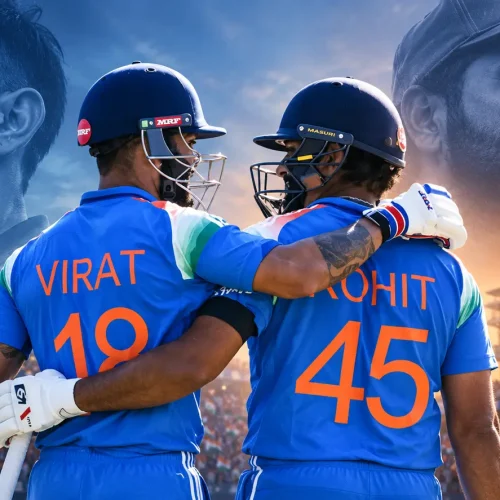
India’s opening-batting position has become one of the most interesting selection battles in international cricket. With several talented batters competing for limited places, the question is no longer simply about finding two players who can score runs. It is about building an opening combination that can deliver powerplay runs, handle pressure, adapt to different formats and remain reliable over the next several years.
The names at the centre of this discussion include Vaibhav Suryavanshi, Sanju Samson, Abhishek Sharma, Shubman Gill, Ishan Kishan and Yashasvi Jaiswal. Each batter brings a different skill set, and the ideal combination depends on the format, opposition, pitch conditions and the team’s wider batting balance.
The latest BCCI squad announcements also show why this debate has become important. India named Abhishek Sharma, Vaibhav Suryavanshi, Sanju Samson and Ishan Kishan in the T20I squad for the Afghanistan series, while Shubman Gill and Yashasvi Jaiswal were included in the Test squad. The BCCI also named Gill as ODI captain for the England series in June 2026.
So, who will open for India next? The answer depends on which format India is preparing for and how the selectors want to balance established performers with emerging talent.
India’s Opening Competition Explained
The opening position carries special importance in modern cricket. The first two batters face the new ball, set the tempo and influence how the middle order approaches the innings.
In T20 cricket, an opener may need to attack from the first over. In ODIs, the same player must manage the powerplay while preserving wickets for the middle overs. Test cricket demands another level of patience, technique and concentration.
This is why India cannot select openers on reputation alone. The team needs players who can perform specific roles.
For example, one opener may be naturally aggressive, while the other may be better at building an innings. In another combination, both openers may attack from the beginning. The right choice depends on the team’s overall strategy.
India’s recent T20I selections demonstrate this flexibility. The BCCI named Abhishek Sharma, Sanju Samson, Ishan Kishan and Vaibhav Suryavanshi in the Afghanistan squad, giving the team several options for the top order.
Vaibhav Suryavanshi: The Young Opener Changing the Conversation
Vaibhav Suryavanshi has become one of the most talked-about young batting prospects in Indian cricket. His inclusion in India’s T20I squads in 2026 has brought a new dimension to the opening debate.
The BCCI included Suryavanshi in the senior men’s T20I squads for the Ireland and England series in June 2026. He was also named in the squad for the Afghanistan T20I series.
His selection is significant because it shows that India is willing to consider young talent for the senior team. However, a squad selection does not automatically mean a player has secured a permanent place in the playing XI.
Suryavanshi’s development should be viewed as a long-term process. Young batters need opportunities to understand international bowling, travel demands, match pressure and the tactical differences between domestic and international cricket.
Why Suryavanshi Could Be Important for India
The biggest attraction of a young attacking opener is the possibility of building a long-term batting combination.
If Suryavanshi develops into a consistent international performer, India could have an additional option at the top of the order for future T20I campaigns. His presence also creates healthy competition for established players.
But there is an important difference between potential and proven international performance. India must give him opportunities according to his readiness rather than treating every selection as a requirement to play.
The Afghanistan T20I squad included Suryavanshi alongside Abhishek Sharma, Sanju Samson and Ishan Kishan. This gives the team several ways to structure the opening pair and No. 3 position.
Sanju Samson: Experience and T20 Opening Ability
Sanju Samson remains an important name in India’s T20I opening discussion.
The ICC’s analysis of India’s 2026 T20 World Cup squad highlighted Samson’s strong record as an opener after the 2024 T20 World Cup. He scored 454 runs in 13 innings during that period, including three centuries, while opening at an average of 34.92 and a strike rate of 181.60.
These figures help explain why Samson has been considered for a regular role at the top of the order. His ability to attack pace bowling and score quickly makes him valuable in the powerplay.
Samson also provides wicketkeeping cover, which can influence the team’s overall combination. India may be able to use a wicketkeeper at the top of the order while selecting additional bowling or all-round options elsewhere.
Why Samson’s Role Matters
A successful opening combination needs continuity. Players must understand each other’s batting patterns, running between wickets and approach to the first six overs.
Samson’s experience gives India an option that has already been tested at international level. However, his place in the XI still depends on current form, team balance and the specific series.
The selection debate is therefore not simply about choosing the most exciting player. It is about deciding which combination gives India the best structure for the match.
Abhishek Sharma: India’s Powerplay Specialist
Abhishek Sharma has established himself as one of India’s most exciting T20 opening options.
His aggressive batting style is suited to the demands of modern T20 cricket, where teams aim to score quickly during the powerplay. The ICC identified Abhishek as a key attacking opener in India’s T20I plans and noted his strike rate of 188.02 in the format during its 2026 World Cup squad analysis.
Abhishek’s value is not limited to boundary hitting. He also offers left-handed batting, which can create a different challenge for opposition bowlers.
A left-right opening combination can force bowling teams to adjust their field placements and bowling plans. It can also help the batting side avoid allowing one bowler to settle into a comfortable rhythm.
The Ideal Partner for Abhishek
Abhishek’s aggressive approach makes the choice of his opening partner particularly important.
A partner such as Samson or Suryavanshi can provide another attacking option. Ishan Kishan offers a similar left-handed attacking profile, while Gill brings a different style of batting and a stronger connection with India’s ODI setup.
The selectors must decide whether they want two attacking openers or a combination that balances aggression with stability.
Shubman Gill: A Key Name in India’s ODI and Test Plans
Shubman Gill occupies a different position in this debate because his importance extends across formats.
The BCCI named Gill captain of India’s ODI squad for the England series in June 2026. He was also named captain of the Test squad for the Afghanistan series.
Gill’s role in Test and ODI cricket makes him an important part of India’s long-term batting planning.
In Test cricket, the opening position requires patience and strong defensive technique. In ODIs, openers need to manage the powerplay, build partnerships and accelerate at the right time.
Gill’s selection as ODI captain also means that his batting position is part of a broader leadership and team-building plan.
Could Gill Return to T20I Opening?
Gill has previously been part of India’s T20I setup, but his place in the 2026 T20 World Cup squad was not guaranteed. The ICC reported that Gill missed the tournament squad after a period of inconsistent T20I performances, while Abhishek Sharma and Sanju Samson were expected to open.
This shows how format-specific selection can be.
A player may be central to India’s Test and ODI plans without being an automatic selection for every T20I series. India’s T20I batting order is built around different requirements, including powerplay scoring and the ability to accelerate throughout the innings.
Gill remains a significant option, but his T20I opening role will depend on the selectors’ preferred combination and his performances in the format.
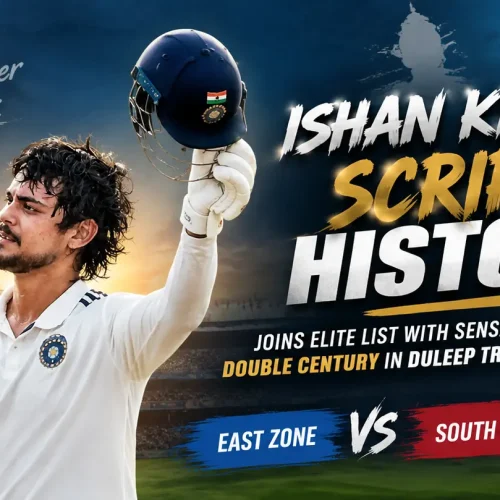
Ishan Kishan: A Left-Handed Option with Power
Ishan Kishan is another important name in India’s opening-batting competition.
The ICC highlighted Kishan’s domestic T20 performances before India’s 2026 World Cup selection. He scored 517 runs in the Syed Mushtaq Ali Trophy at an average of 57.44 and a strike rate of 197.32, including two centuries.
These performances helped bring him back into the international selection discussion.
Kishan offers India an attacking left-handed option who can also keep wickets. This makes him useful when the team is planning its overall batting and bowling balance.
His role could be particularly important when India wants to select two wicketkeepers in the playing XI. Samson and Kishan can both bat at the top of the order, giving the team flexibility in deciding who opens and who plays elsewhere.
Yashasvi Jaiswal: The Test Opener with a Different Role
Yashasvi Jaiswal is a major name in India’s opening-batting discussion, but his role must be considered separately from the T20I debate.
The BCCI included Jaiswal in India’s Test squad for the Afghanistan series in June 2026.
Test cricket requires openers to deal with the new ball for long periods. They must leave the ball well, defend with discipline and build partnerships.
Jaiswal’s inclusion in the Test squad reflects his importance to India’s long-format batting plans. However, his Test role does not automatically mean he will open in the next T20I series.
Why Jaiswal Matters in the Future
India needs a strong group of openers across all formats.
A player who performs well in Test cricket may not necessarily be the right choice for a particular T20I combination. The selectors must consider format-specific skills, recent form and the team’s tactical requirements.
Jaiswal remains an important part of India’s long-term opening options, especially in Test cricket.
The Biggest Selection Challenge: Too Many Good Options
The main difficulty is not a shortage of talent. It is deciding how to use the talent available.
India’s T20I squad for Afghanistan included Abhishek Sharma, Vaibhav Suryavanshi, Sanju Samson and Ishan Kishan. The team therefore had several players capable of contributing at the top of the order.
This creates a selection challenge.
If India selects two openers, at least two other top-order options may miss out or move to another position. The selectors must decide whether to prioritise continuity, current form, experience or future development.
Possible T20I Opening Combinations
Abhishek Sharma and Sanju Samson
This combination offers an aggressive left-handed opener alongside an experienced right-handed batter. The ICC identified the pair as India’s preferred opening combination for the 2026 T20 World Cup.
Abhishek Sharma and Vaibhav Suryavanshi
This combination would give India two attacking openers. It could be considered when the team wants to prioritise powerplay aggression and provide opportunities to a young player.
Sanju Samson and Ishan Kishan
This pairing offers two wicketkeeping options and two batters capable of opening. The ICC noted that both players could also move into the middle order if required.
Shubman Gill and Abhishek Sharma
This combination would bring together an established top-order batter and an aggressive T20 opener. It could be considered if Gill returns to India’s T20I plans and the team wants to combine stability with attacking intent.
Ishan Kishan and Vaibhav Suryavanshi
This would be another left-handed combination. It could offer a high-tempo approach, although the team would need to consider the balance of the middle order and the bowling options available.
These are possible combinations, not confirmed selections. The final XI depends on the squad, match conditions, player availability and the selectors’ decisions.
What Should India Consider Before Choosing Openers?
India’s opening-batting plans should be based on clear selection criteria.
1. Recent Form
Recent performance should be an important factor. Players who are scoring consistently in international cricket or domestic competitions should remain part of the discussion.
However, form must be considered in context. A player’s performances against different bowling attacks and in different conditions can provide useful information.
2. Format Requirements
A Test opener and a T20I opener have different responsibilities.
India should avoid treating the opening position as identical across formats. The best T20I combination may not be the best ODI or Test combination.
3. Team Balance
The opening pair must fit into the rest of the batting order.
If two openers are aggressive, the middle order may need players who can build partnerships. If the team selects two wicketkeepers, it must also decide how to use its remaining batting and bowling resources.
4. Long-Term Planning
India should develop a group of openers rather than rely on only two players.
Injuries, workload management and changes in form can affect any team. A strong reserve group gives the selectors more flexibility.
5. International Experience
Young players need opportunities, but established players also need support.
The best approach may involve a combination of experience and emerging talent, depending on the format and series.
Why Opening Competition Is Good for Indian Cricket
Healthy competition can improve the quality of Indian cricket.
When several players are competing for a place, they have an incentive to maintain strong performances. This can increase the overall depth of the batting group.
Competition also allows the selectors to consider different combinations.
For example, India may want an aggressive opening pair against a team with a strong bowling attack. In another match, the team may prefer a combination that can build a longer partnership.
Having several options makes this possible.
Benefits for the National Team
A strong group of openers can help India:
- Maintain batting depth across formats.
- Manage player workload more effectively.
- Develop young players without rushing them.
- Adapt to different pitch and opposition conditions.
- Create competition for places in the playing XI.
- Reduce dependence on a single opening combination.
These benefits are important for a team preparing for multiple international series and tournaments.
The Future of India’s Opening-Batting Plans
The future of India’s opening combination will depend on how the selectors balance established players and emerging talent.
Suryavanshi’s inclusion in the 2026 T20I squads gives India another young option. Abhishek Sharma continues to offer an attacking style, while Samson and Kishan provide experience and wicketkeeping flexibility. Gill and Jaiswal remain important names in India’s ODI and Test opening plans.
The selectors do not need to make every decision permanent.
A player can be selected for a particular series based on conditions, form and team requirements. Another player can be given opportunities in a different series.
This approach can help India build a more flexible batting group.
Planning for Major Tournaments
India’s opening plans should be developed with major tournaments in mind.
The selectors need to know which players can perform under pressure, which combinations work best and which players can adapt when the first-choice options are unavailable.
The key is to develop a clear hierarchy of roles while still allowing room for competition.
What Could Happen Next?
The next stage of India’s opening-batting debate will depend on selection decisions and performances in upcoming matches.
The BCCI’s Afghanistan T20I squad gives India several options at the top of the order. The series provides an opportunity to assess how the players fit into the team’s plans.
The result of this competition may not be a single permanent opening pair.
Instead, India could develop different combinations for different formats and conditions.
For example, the team may use one combination in T20Is, another in ODIs and a separate pair in Test cricket.
This would allow the selectors to make decisions based on the demands of each format rather than forcing one combination across all three.
Final Thoughts
India’s opening-batting competition is a reflection of the country’s growing cricketing depth.
Vaibhav Suryavanshi represents emerging talent. Sanju Samson brings experience and T20I opening ability. Abhishek Sharma offers powerplay aggression. Shubman Gill remains important to India’s ODI and Test plans. Ishan Kishan provides another attacking left-handed option, while Yashasvi Jaiswal is a key part of the Test opening group.
The challenge for India is to turn this talent into a balanced and reliable batting combination.
The next opening pair will be decided by performance, format requirements, team balance and selection strategy. As Indian cricket continues to develop, the competition for the top two batting positions is likely to remain one of the most closely followed stories in the game.