

India came into the second Test in Colombo with one job on their mind — finish the series. After the 165-run win in Galle, Shubman Gill’s side had already taken a 1-0 lead. Sri Lanka, meanwhile, needed a much better performance at the Sinhalese Sports Club if they were going to keep the series alive. The second Test has not been as straightforward as the scorecard might suggest. India won the toss and chose to bat, but Sri Lanka’s bowlers found enough movement early on to make life uncomfortable. There were wickets, missed chances and even an injury scare for Rishabh Pant. And yet, once again, Devdutt Padikkal stood between Sri Lanka and a breakthrough opportunity. The Karnataka batter followed his sensational 167 in Galle with another hundred in Colombo, scoring 117 from 193 balls. It was his second Test century in as many matches and the innings that gave India the platform they needed. India’s innings has continued into Day 2, with the latest live score showing 321/6 after 90.4 overs, with Rishabh Pant batting alongside Dhruv Jurel. (NDTV Sports) That means one thing is already clear: Sri Lanka have had their opportunities, but India have repeatedly found a way to stay ahead. Padikkal Has Gone From Opportunity to India’s Biggest Batting Story A couple of weeks ago, Devdutt Padikkal was still trying to establish himself as a Test cricketer. Now, after two Tests, he has become one of the biggest talking points of India’s Sri Lanka tour. His first Test century came in Galle, where he made 167, followed by 44 in the second innings. Then came Colombo. Another hundred. This time, 117 off 193 deliveries, with 12 fours. The numbers are impressive, but the circumstances make the innings even better. Padikkal was not batting on a completely flat surface where the ball came nicely onto the bat. The SSC pitch offered movement and bounce, particularly earlier in the innings, and Sri Lanka’s seamers managed to trouble India’s top order. (The Times of India) Padikkal had to work for his runs. He did. And once he settled, Sri Lanka struggled to get him out. This Was a Different Hundred From Galle The most encouraging thing about Padikkal’s two centuries is that they haven’t looked like copies of each other. In Galle, he was able to build a huge innings and eventually reach 167. Colombo asked different questions. There was more movement early on. Sri Lanka’s seamers were able to get the ball to nip around, and India lost KL Rahul and Yashasvi Jaiswal relatively early. Padikkal responded by slowing things down. He didn’t try to force the scoring rate. He stayed close to the ball. He defended when he needed to. And when Sri Lanka gave him something to work with, he put it away. That is exactly the kind of batting India will want from a No. 3. Not just pretty strokeplay. Not just one big innings. The ability to understand what the match needs. Sri Lanka Had Their Chances — Padikkal Made Them Pay There was another interesting element to Padikkal’s innings. He was given more than one life. Sri Lanka had opportunities to remove him early, but they couldn’t hold on to them. Once those chances went begging, Padikkal became increasingly difficult to dislodge. That is one of those old Test cricket lessons that never really changes. You get a chance. You take it. If you don’t, the batter makes you pay. Padikkal did exactly that. And considering what he had already done in Galle, Sri Lanka would have been painfully aware that they could not afford to let him settle. Padikkal’s Back-to-Back Hundreds Have Changed the No. 3 Conversation This is probably the biggest story coming out of Colombo. India’s No. 3 position had been one of the areas under discussion before the series. Sai Sudharsan was expected to be part of India’s plans but was unavailable because of injury. That opened the door for Padikkal. He has now walked through it in a very convincing fashion. 167 in Galle. 117 in Colombo. Two Tests. Two centuries. And suddenly, the question is no longer whether Padikkal can handle Test cricket. The question is how difficult it will be to leave him out when Sai Sudharsan returns. Even India’s batting coach Sitanshu Kotak has acknowledged that Padikkal has given the team plenty to be pleased about, while also pointing out that India could have avoided some of the dismissals around him. (icc) That is a good problem for India to have. Shubman Gill’s Half-Century Was Just as Important Padikkal got the headlines, but Shubman Gill played a very useful supporting role. Gill scored 50 from 108 balls and shared a 120-run partnership with Padikkal. It was not the most explosive innings. It didn’t need to be. India had already lost Rahul and Jaiswal, so Gill’s job was to settle things down and allow Padikkal to continue building. The pair did exactly that. At one point, India had been reduced to 66/2. By the time Gill was dismissed, India had reached 186/3. That is the sort of partnership that can change the feel of a Test innings. Sri Lanka had the early momentum. Gill and Padikkal slowly took it away. India’s Middle Order Has Had to Do More Work Than Expected The basic idea before the match was probably simple. India had won the first Test convincingly. Their top order was in good form. Padikkal was coming off 167. Sri Lanka were already missing important batters. But Test cricket rarely follows the script. India lost wickets at regular intervals. Gill departed after his half-century. Padikkal eventually fell for 117. Ravindra Jadeja made 43 before Asitha Fernando dismissed him. Saransh Jain, making his Test debut, was then removed for six. At the latest verified score, India were 321/6, with Rishabh Pant and Dhruv Jurel at the crease. (NDTV Sports) So while India are clearly in a strong position, this has not been a completely one-sided batting
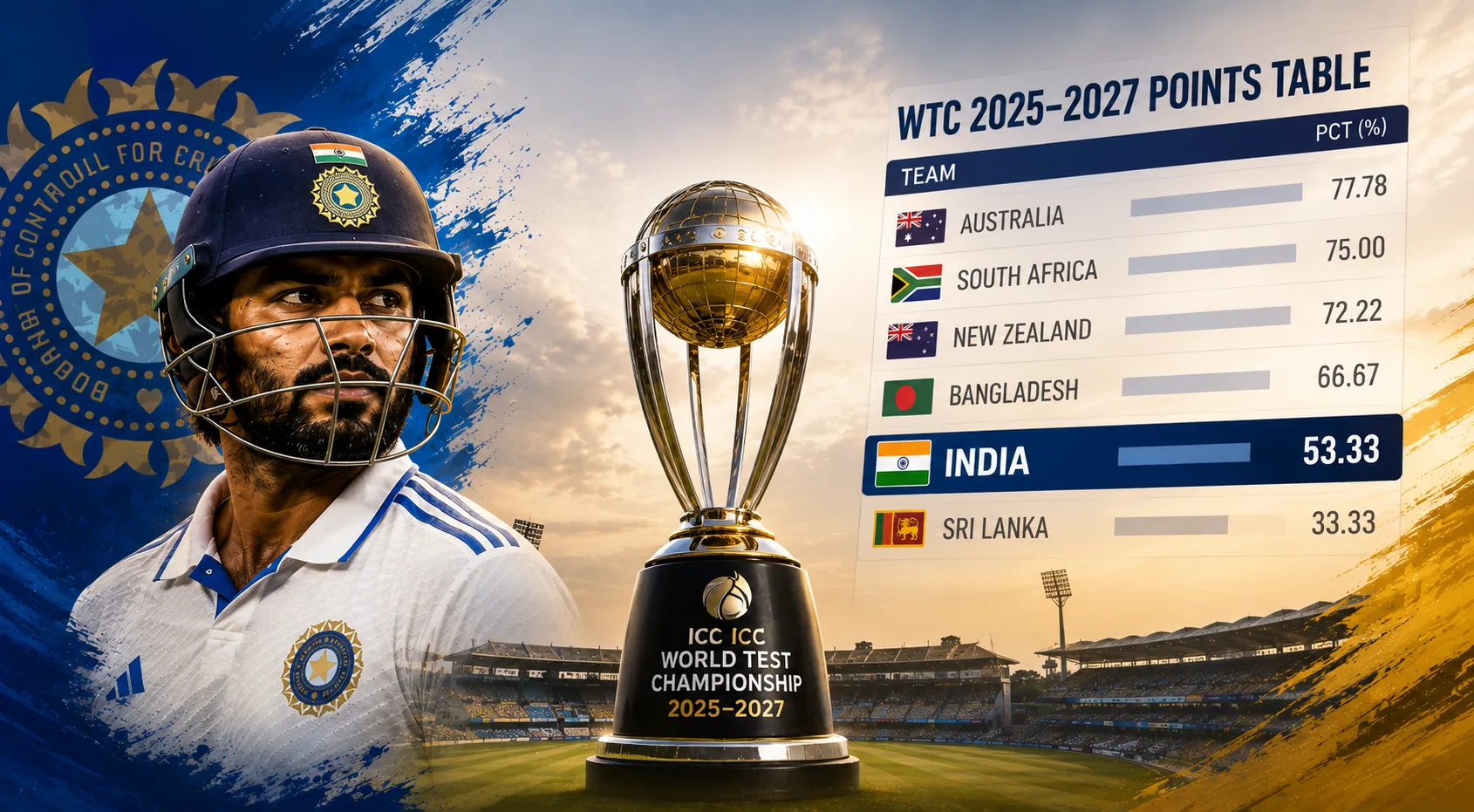
WTC 2025–2027 Points Table: Where Team India Stands After the Sri Lanka Tour
The second Test against Sri Lanka is more important to India’s WTC campaign than the 1-0 series score might suggest. India currently sit fifth in the WTC 2025–27 table with 64 points from 10 Tests and a points percentage of 53.33%. Australia lead the standings on 77.78%, followed by South Africa at 75%, New Zealand at 72.22% and Bangladesh at 66.67%. Sri Lanka are sixth with 20 points and a 33.33% PCT. So, what happens if India win the second Test? What if Sri Lanka fight back and win? And how much would a draw hurt India’s chances? Here is the simple breakdown. If India Win the Second Test A win would give India another 12 WTC points. India currently have: A victory in Colombo would take India to: The calculation is straightforward: India would have 76 points from a possible 132, giving them a PCT of 57.58%. That would be a significant improvement, although India would still be fifth unless results elsewhere move in their favour. For Sri Lanka, a defeat would leave them on 20 points from six Tests, dropping their PCT to 27.78%. If Sri Lanka Win the Second Test This is where things become much more uncomfortable for India. Sri Lanka would receive 12 points and move from 20 to 32 points. Their record would become: India, meanwhile, would remain on 64 points, but their PCT would fall because they would have completed another Test without adding any points. India would then have: That would be a major setback. India would drop from 53.33% to 48.48%, and the gap between them and the teams above them would become even harder to close. A Sri Lankan victory would also give the hosts a huge boost in their own WTC campaign. If the Second Test Ends in a Draw A draw would give both teams four points. India would move from 64 to 68 points, while Sri Lanka would move from 20 to 24 points. India’s new numbers would be: Sri Lanka would have: For India, a draw would therefore leave them below their current 53.33% PCT. That is why a draw is not particularly helpful for a team trying to catch Bangladesh, New Zealand and South Africa. India vs Sri Lanka: WTC Second Test Scenarios Second Test result India points India PCT Sri Lanka points Sri Lanka PCT India win 76 57.58% 20 27.78% Draw 68 51.52% 24 33.33% Sri Lanka win 64 48.48% 32 44.44% These numbers make India’s objective pretty clear. A win would give India a useful boost. A draw would actually lower their PCT. A defeat would put them in a much more difficult position. How Much Would a Colombo Win Help India? A 2-0 series win would not suddenly put India into the top four. That is important to understand. Even after reaching 57.58%, India would still need other results to go their way if they want to move above Bangladesh, New Zealand or South Africa. But the win would give them something they desperately need at this stage of the WTC cycle: momentum and points. More importantly, India have eight Tests remaining after the first Test in Sri Lanka, and the schedule gets considerably tougher from here. After Colombo, India face New Zealand away before a five-Test home series against Australia. That means every point collected against Sri Lanka becomes increasingly valuable. What If India Lose in Colombo? A defeat would be a much bigger problem than the numbers initially suggest. India’s PCT would fall below 50% to 48.48%. That would leave them behind Bangladesh by a considerable margin and put even more pressure on the New Zealand series. India would then need an extremely strong run in their remaining seven WTC Tests. There would be very little room for another defeat. For Sri Lanka, however, a win would be a huge turnaround. They would move to 44.44%, close the gap on India and finish the series level at 1-1. That is why Sri Lanka will have plenty to play for even though India won the opening Test convincingly. What If India Draw? A draw sounds relatively harmless because India would still finish the series unbeaten. But the WTC table does not reward that result particularly well. India would receive only four points and their PCT would fall from 53.33% to 51.52%. That would leave them needing even more wins later in the cycle. For a team sitting fifth and chasing the top two positions, a draw is not the ideal result. India need to turn favourable positions into wins. The 7-Win Target Becomes Even More Important India’s remaining schedule makes the second Test particularly significant. If they win in Colombo, they would move to 76 points and 57.58%. From there, they would have seven Tests remaining: If India were to win all seven, they would finish with: 76 + 84 = 160 points From a maximum possible 216 points across 18 Tests, that would give them a final PCT of: 74.07% That would put India in an extremely strong position. Of course, winning seven straight Tests against New Zealand and Australia is a huge ask. But the calculation shows why the Colombo result matters. A victory keeps the ceiling high. A defeat makes the road much steeper. What If India Win 6 of Their Remaining 7 After Colombo? This is probably a more realistic scenario to consider. If India win the second Test against Sri Lanka and then win six of their final seven Tests, they would collect another 72 points. Their final total would be: 76 + 72 = 148 points That would give India a final PCT of: 68.52% That is still a very competitive number, although whether it is enough for the WTC Final would depend on how Australia, South Africa, New Zealand and Bangladesh finish their own campaigns. This is the key point with the WTC. India cannot control the entire table. They can only control their own results. And If India Lose in Colombo?

India vs Sri Lanka 2nd Test Preview: Can India Complete a Clean Sweep at SSC Colombo?
India have put themselves in a very good position in the Test series against Sri Lanka, but there is still one match left to finish the job. After a convincing 165-run win in Galle, Shubman Gill’s side head to the Sinhalese Sports Club in Colombo with a 1-0 lead and a chance to leave Sri Lanka with a clean sweep. The second Test begins on August 23, and while India will start as favourites, the Colombo conditions could make this a very different game from the one we saw in Galle. The first Test gave us plenty to talk about. Devdutt Padikkal announced himself with a superb 167, Manav Suthar took 10 wickets in only his second Test, and India’s spinners eventually broke through a Sri Lankan batting line-up that struggled to stay together for long periods. Sri Lanka now have another problem to deal with. They will be without Kusal Mendis, Pathum Nissanka and Dinesh Chandimal, leaving Dhananjaya de Silva with a much younger and less experienced batting group around him. So, can Sri Lanka force a series-levelling win in Colombo, or will India complete another Test series clean sweep on Sri Lankan soil? India have every reason to be confident It is hard to find too many negatives for India after the way they played in Galle. The visitors did not need to depend on one outstanding performance. Their batting had enough depth, the bowlers kept asking questions and, when Sri Lanka looked like getting back into the game, India found a way to shut the door. Padikkal’s 167 was obviously the headline from India’s first innings. It was his maiden Test century and came at a time when India needed someone to make the opportunity count. He was followed by KL Rahul’s 82, while Rishabh Pant and the lower order also contributed useful runs. India eventually put themselves in a position where Sri Lanka had a sizeable target to chase. That is where Manav Suthar came into the picture. The left-arm spinner had only one Test to his name before this series, but he looked remarkably comfortable in the conditions. His 10 wickets in Galle, including 6/55 in the second innings, were enough to earn him the Player of the Match award. For a young spinner, that is some introduction to Test cricket. It also gives India another option that Sri Lanka will now have to think about carefully. Colombo could be a different challenge The SSC is not exactly the same proposition as Galle. The Sinhalese Sports Club has traditionally produced good batting surfaces, particularly early in a Test. There is usually enough in it for spinners later on, but teams cannot simply assume that the ball will turn square from the first session. That is important for Sri Lanka. There have been suggestions that the hosts are looking at a reasonably balanced pitch rather than preparing an outright turning track. Given their current batting situation, that makes sense. A raging turner sounds like a good idea when you are trying to beat India at home. But Sri Lanka also have to bat on it. And right now, their batting is already short on experience. A surface that gives spinners too much assistance could end up hurting Sri Lanka just as much as it hurts India. Sri Lanka have been hit hard by injuries The timing of Sri Lanka’s injury problems could hardly be worse. Kusal Mendis is unavailable with a hamstring injury, while Pathum Nissanka is still recovering from wrist surgery. Dinesh Chandimal will also miss the Colombo Test after suffering a concussion during the first match. That is a lot of experience disappearing from one batting order. Sri Lanka have brought Kamil Mishara and Sahan Arachchige into the squad, and both have been rewarded for their recent performances. But replacing experienced Test batters is never as simple as bringing in two fresh names. Dhananjaya de Silva will therefore have an even bigger job on his hands. The Sri Lankan captain showed plenty of fight in Galle, particularly in the second innings, when he scored 59 and helped keep the game alive for a while. He will need something similar again, although this time he may need a much bigger contribution from the players around him. Sonal Dinusha gives Sri Lanka something to build on If there was one clear positive for Sri Lanka in Galle, it was Sonal Dinusha. He scored a century in the first innings and followed that up with 84 in the second. More importantly, he showed that he was comfortable spending a long time at the crease against India’s attack. His second-innings partnership with Dhananjaya was exactly what Sri Lanka needed more of. The problem was that the resistance did not last long enough. Sri Lanka’s challenge in Colombo is therefore not necessarily about finding one batter who scores 150. They need several players to stay at the crease together. If they can get two or three meaningful partnerships going, India will have to work much harder for their wickets. If the top order disappears again, the match could quickly follow the same pattern as Galle. Manav Suthar has changed India’s spin equation Before the first Test, much of the attention around India’s spin attack was understandably on Ravindra Jadeja and Kuldeep Yadav. Suthar was the less familiar name. After Galle, that has changed. His 10 wickets were not the result of simply throwing the ball up and hoping the pitch did the rest. He bowled long spells, stayed patient and repeatedly put the ball in areas that made Sri Lankan batters play. That is probably the most encouraging part of his performance for India. Young spinners can have one good Test. Doing it over long spells while maintaining accuracy is a different matter. The Colombo Test will be a much better indication of where Suthar stands. Sri Lanka will also have had a chance to study him now. They know what he wants to do, and they will
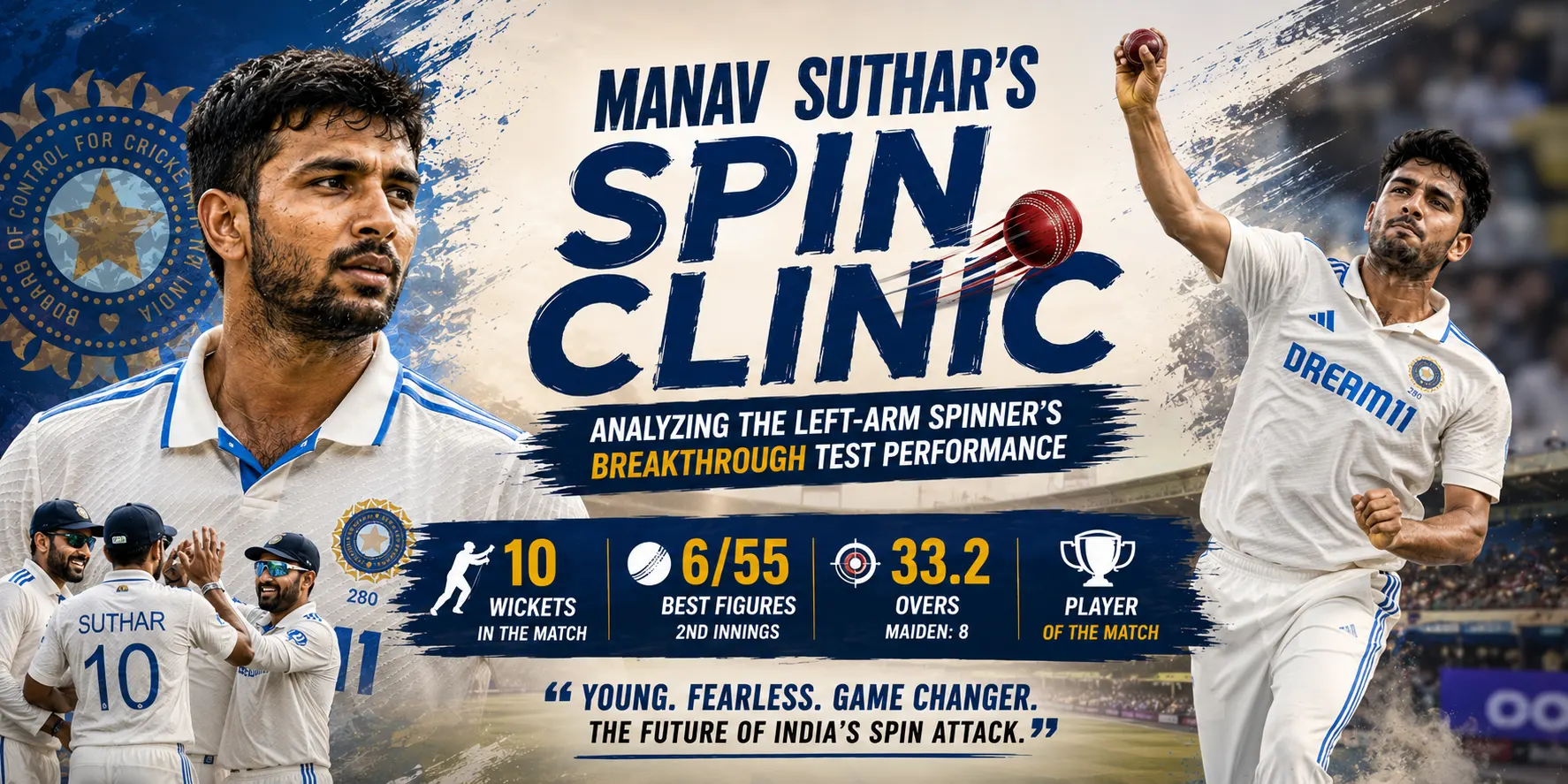
Manav Suthar’s Spin Clinic: Analyzing the Left-Arm Spinner’s Breakthrough Test Performance
Manav Suthar’s 10-Wicket Haul in Galle — World Cricket Buzz Cricket News/Test Cricket Test Cricket · India in Sri Lanka Manav Suthar’s 10-Wicket Haul in Galle Has India Asking a Bigger Question WB World Cricket Buzz Cricket News & Analysis · 8 min read 4/76 1st Innings 6/55 2nd Innings 10/131 Match Figures IND won by 165 runs There are Test match performances that win you a game, and then there are performances that make people stop and ask a much bigger question: have India found their next long-term spinner? Manav Suthar’s performance in Galle certainly belongs in the second category. The 24-year-old left-arm spinner produced a match-winning 10-wicket haul as India beat Sri Lanka by 165 runs in the first Test of the series. He took 4/76 in the first innings and followed it with 6/55 in the second, finishing with 10 wickets for 131 runs. It was only Suthar’s second Test. That is what makes the performance so interesting. There was no long international career behind him, no decade of experience to fall back on and no established reputation that guaranteed him a place in India’s XI. He simply arrived in Galle, bowled with patience and accuracy, and ended the match as the biggest reason Sri Lanka could not chase down 372. India already have Ravindra Jadeja. They have Kuldeep Yadav. They have other spin options waiting in the domestic system. Now they have Suthar too. And after what happened in Galle, it is becoming increasingly difficult to look at him as just another young player being given a chance. The numbers tell only half the story Let’s start with the obvious. Match Figures — 1st Test, Galle 4/76 First Innings 6/55 Second Innings 10/131 Match Total 24y 16d Youngest Indian, away 10-for Those are excellent numbers for any spinner. For a player appearing in just his second Test, they are even more impressive. Suthar also became the youngest Indian to take a 10-wicket haul in an away Test, achieving the feat at 24 years and 16 days. He is now only the third Indian bowler after Harbhajan Singh and Ravichandran Ashwin to take 10 wickets in a Test in Sri Lanka. But statistics can sometimes hide what actually happened on the field. Suthar’s spell was not about producing one magical delivery after another. It was much simpler than that. He kept bowling in good areas. He made Sri Lanka’s batters play. And he waited. That patience eventually paid off. Galle gave him the perfect stage Galle is a venue where spin is always expected to play a major role. The pitch generally becomes more difficult as the Test progresses, and India’s bowlers knew that if they could keep Sri Lanka under pressure for long enough, the surface would eventually offer them more assistance. Suthar understood that perfectly. He did not seem desperate to find a wicket every over. Instead, he concentrated on creating pressure. That is an important distinction for a young spinner. You can often tell when a bowler is trying too hard. The length changes, the ball gets dragged down, the line disappears and suddenly the batter gets an easy release shot. Suthar avoided much of that. He trusted his stock delivery. That gave him something even more valuable than turn — control. His second innings was the real masterclass The first-innings four wickets were important, but it was the second innings where Suthar truly took control of the Test. Sri Lanka were chasing 372. They needed a very good start, and for a while they looked capable of making India work for the victory. Then Suthar started working through the batting order. He finished with 6/55, helping bowl Sri Lanka out for 206 and sealing India’s 165-run victory. The conditions had deteriorated by then. That is exactly when a spinner has to know how to use the pitch without becoming overly dependent on it. Suthar did that well. He kept attacking the stumps and making the batters commit to their shots. Once the pressure built, mistakes started coming. The wickets were not isolated events. They were the result of sustained pressure. That is what made the spell feel like a proper Test bowling performance rather than a lucky haul. What makes Suthar different? India have produced plenty of left-arm spinners over the years. So what makes Suthar worth watching? His ability to bowl long spells without losing his shape His consistency The subtle variation in his bowling KL Rahul highlighted Suthar’s consistency and subtle variations when discussing what makes him difficult to face. Those variations do not necessarily mean extravagant changes of action. That is not what makes a good Test spinner. Sometimes the difference is simply in flight, pace, trajectory or where the ball lands. A fraction more air can encourage a batter to drive. A slightly flatter delivery can rush him. A little more turn can bring the outside edge into play. Suthar appears comfortable making those small adjustments. And that is exactly the kind of skill that becomes more valuable the longer a Test match goes. He is not trying to bowl like a mystery spinner One thing that stands out about Suthar is that his bowling does not appear to depend on trying to surprise the batter every ball. There is a temptation with young spinners to become obsessed with variations. Do something different. Try a different angle. Change the pace. Throw in another delivery. Suthar’s approach in Galle was much more old-fashioned. Get the ball in the right area. Keep the batter under pressure. Make him play. Then wait for the mistake. That may sound basic, but Test cricket has always rewarded bowlers who can repeat the basics for hours. The best spinners are often the ones who make the same delivery feel different because the batter knows there is very little room for error. Ravindra Jadeja’s presence helped too Suthar’s performance should not be viewed in isolation. India had another experienced left-arm spinner operating at the other
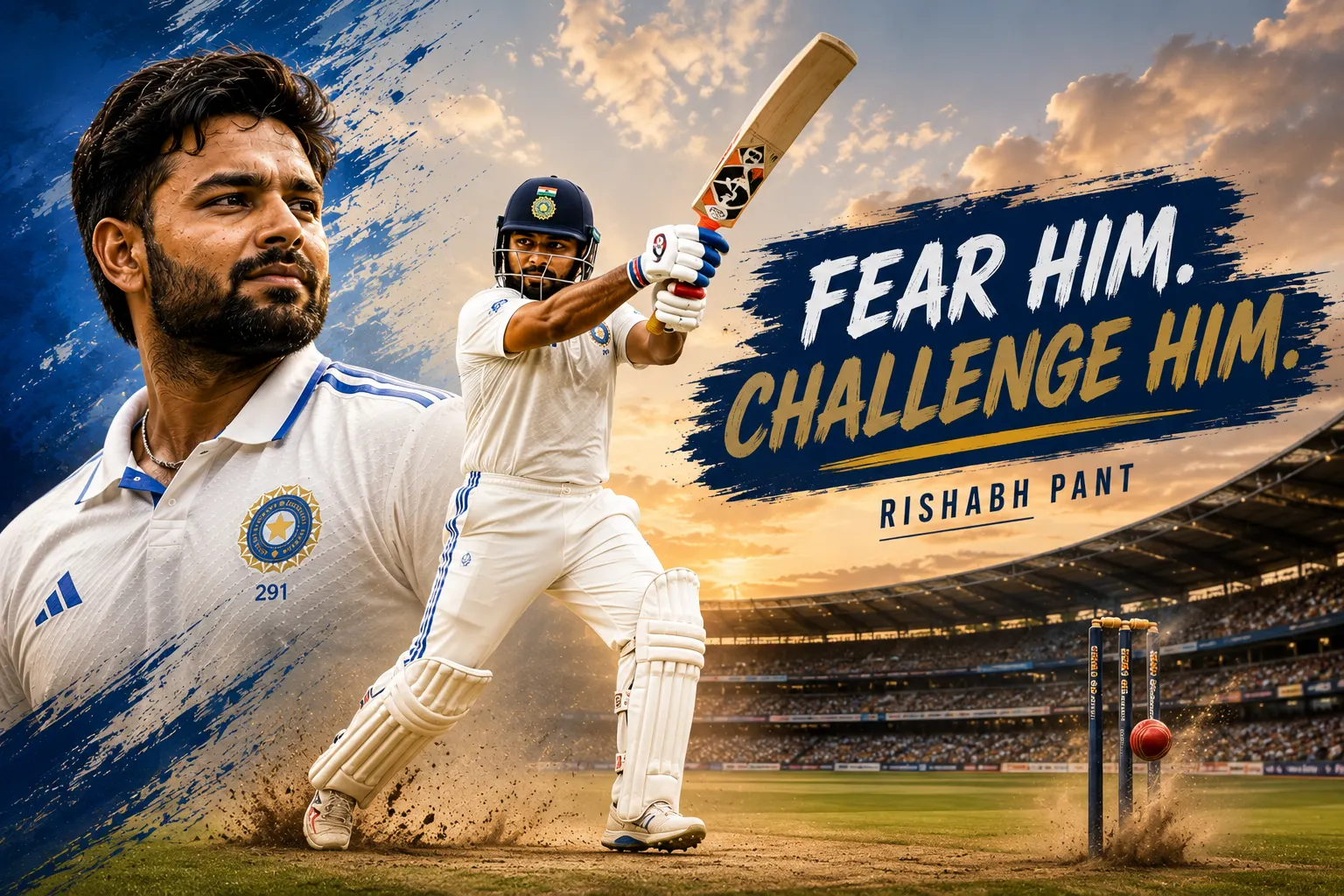
Rishabh Pant’s Counter-Attacking Genius: Why Bowling Units Fear Him in Fourth-Innings Chases
There are some batters a bowling team wants to keep at the crease because they know what is coming. Then there is Rishabh Pant. With Pant, the problem is not just trying to get him out. It is trying to work out what he might do before the next ball is even bowled. That unpredictability has become one of the defining features of his Test batting. He can defend for a few deliveries, suddenly walk down the pitch, hit a spinner over his head, reverse the pressure with a sweep or drive a fast bowler through the covers. And when a Test reaches its final innings, with a target on the board and the fielding side expecting batters to play cautiously, Pant’s natural instinct is often to go in the other direction. That is what makes him such a dangerous fourth-innings batter. His record backs up the reputation. In the fourth innings of Tests, Pant had scored 436 runs at an average of 54.50 across 10 innings by the end of 2024, with a strike rate of 76.22. Among Indian batters with at least 400 fourth-innings runs, only Sunil Gavaskar and Vijay Manjrekar had better averages at that stage. His away fourth-innings average was even more impressive at 71.40. And this is not a player who suddenly discovered counter-attacking cricket in the last few years. Pant has been doing it since the beginning of his Test career. His first Test hundred came in a fourth-innings chase at The Oval in 2018. Then came the famous 97 at Sydney in 2021 and the unbeaten 89 at the Gabba, where India chased down Australia’s target to win the Border-Gavaskar Trophy. That history explains why opposition bowling attacks are never completely comfortable when Pant walks out with a target still to be chased. Pant changes the question for the bowling team Normally, when a team is defending a fourth-innings total, the bowlers want the batting side to make the first move. They bowl a good length. They build pressure. They wait for a mistake. Pant has a habit of refusing to play that game. He understands that the bowling side is already carrying pressure. They know the target. They know the pitch is getting older. They know every boundary reduces the number of runs they have to defend. Pant uses that pressure against them. A spinner who expects a batter to defend suddenly sees Pant coming down the track. A fast bowler who thinks a good-length delivery will tie him down can suddenly watch the ball disappear through cover. The field changes. The captain moves a fielder. The bowler changes his line. And Pant has already gained something valuable: he has made the opposition react to him. That is the essence of counter-attacking Test batting. The fourth innings brings out something different in Pant Pant’s overall Test record is already impressive. He has now played 51 Tests, scoring 3,662 runs at an average of 43.60, with eight centuries and 20 fifties. His strike rate is 74.22, which is remarkably high for a Test batter with that amount of cricket behind him. But the fourth innings has always seemed to bring out an extra level of intent. There is a simple reason. Pant knows that time is often not on his side. If India need 250 with two days remaining, he can take his time. If India need 150 on the final day with five wickets down, the calculation changes. At that point, the opposition is expecting pressure to make the batter defensive. Pant often turns that logic around. He asks the bowlers a different question: What happens if I attack you before you can settle? That is why his fourth-innings record is so unusual. The Gabba innings remains the perfect example The unbeaten 89 at the Gabba in 2021 is probably the clearest example of Pant’s fourth-innings mentality. India needed 328 to win. The pitch was not a road. Australia had one of the strongest bowling attacks in the world. Nathan Lyon was operating on a surface where the ball could turn, while Pat Cummins and Josh Hazlewood were constantly asking questions outside the off stump. India still needed 161 runs when Pant came into the game. Most batters in that situation would be thinking about survival first. Pant was thinking about scoring. He drove Cummins and Hazlewood. He attacked Lyon with cuts and sweeps. He came down the pitch when the opportunity presented itself. And eventually, India chased the target with three wickets remaining. That innings was not simply about playing aggressively. Pant understood that Australia were waiting for India to become defensive. Instead, he made them defensive. That is the difference. His Oval hundred set the pattern The Gabba was not an isolated moment. Pant’s first Test century came in his debut series in England in 2018. India were chasing 464 at The Oval, and Pant scored 114. India did not win the match, but the innings immediately showed what kind of Test batter India had on their hands. The BCCI itself lists that fourth-innings century as one of the defining moments of Pant’s early Test career. A young wicketkeeper walking into a massive fourth-innings chase in England and scoring a hundred was enough to make people take notice. The important thing was not just the score. It was the willingness to take the game on. That has remained part of Pant’s Test identity ever since. Sydney 2021 showed the other side of his game The unbeaten 89 at Brisbane gets most of the attention, but Pant’s 97 at Sydney was arguably just as important in showing how he handles fourth-innings pressure. India were chasing 407. The match was already moving towards an Australian victory when Pant began changing the mood. He attacked the bowling, scored quickly and put India in a position where the impossible suddenly looked possible. India eventually drew the match rather than winning it, but Pant’s approach forced Australia to reconsider their plans. That is another

Shubman Gill vs Yashasvi Jaiswal: Analyzing India’s Most Dynamic Modern Opening Pair
There is something interesting about Shubman Gill and Yashasvi Jaiswal. They are both young by Indian cricket’s standards, both have already played some memorable Test innings, and both are expected to be part of India’s batting core for years. Yet, despite being spoken about as a natural opening combination, their Test careers have taken slightly different routes. Jaiswal is now India’s established Test opener. Gill, meanwhile, has moved into the No. 3 position in Test cricket and is leading the side. In the current Sri Lanka series, Jaiswal has opened alongside KL Rahul, while Gill has come in at first down. The official squad and recent match line-ups confirm that this is how India are currently structuring their Test top order. That detail is worth clearing up at the beginning because the Gill-Jaiswal opening pair is more of a developing idea and a limited-overs combination than India’s current Test opening partnership. But that does not make the story any less interesting. In fact, it may make it more interesting. Because when these two eventually bat together at the top, India will have something quite rare: a left-right pair with very different personalities at the crease, but enough understanding of each other’s game to potentially build something special. We have already seen glimpses of it. And the latest developments in Sri Lanka have only added another layer to the conversation. Two very different batters, one very similar ambition Gill and Jaiswal did not arrive at international cricket in the same way. Gill was identified as a special batting talent from a very young age. His game was polished, technically sound and built around timing. Jaiswal’s journey was far less conventional. He came through Mumbai cricket after moving there from Uttar Pradesh and had to fight his way into the professional game. Their batting styles are different too. Gill is usually at his best when he has time to settle. His cover drives, back-foot punches and ability to rotate the strike make him look comfortable when the innings starts to slow down. Jaiswal is more instinctive. He likes to put pressure on the bowler early. He is willing to use his feet against spin, attack the gaps and take on the field before the opposition has settled. Put the two together and you get a left-right combination with different gears. That is what makes the idea so appealing. But India’s current Test setup has Gill at No. 3 This is where the modern story around the pair becomes slightly complicated. When India first gave Jaiswal his Test debut in 2023, Gill moved down to No. 3 because Rohit Sharma remained at the top. The ICC noted at the time that Jaiswal would open while Gill moved down the order. There was another brief glimpse of Gill and Jaiswal opening together during India’s 2023 West Indies tour, but it was not a permanent arrangement. The combination became much more talked about in 2024, particularly in T20 cricket, when India were moving towards a younger generation of batters. There was a feeling that Gill and Jaiswal could eventually become India’s long-term left-right opening combination. That idea still has plenty of appeal. But Test cricket has gone in a slightly different direction. KL Rahul has continued to provide India with an experienced option at the top, while Gill has taken over the captaincy and settled into the No. 3 role. And, at least for now, India appear comfortable with that arrangement. The warm-up match gave us another glimpse Before the current Sri Lanka Test series, Gill and Jaiswal did get an opportunity to bat together at the top. During India’s warm-up match against Sri Lanka Cricket XI in Colombo, Gill returned from a finger injury and joined Jaiswal in the chase. The pair put together a 105-run opening partnership, with Jaiswal making 61 and Gill scoring 44. It was only a practice game, so nobody should read too much into the numbers. But it was useful for another reason. Gill had missed the opening part of the warm-up after hurting his right ring finger in training. He returned to bat at the top alongside Jaiswal and looked comfortable enough to allay concerns about his fitness before the Galle Test. For India, that was probably more important than the partnership itself. The captain was fit. Jaiswal was finding rhythm. And the two players got some time together in Sri Lankan conditions. Then Galle changed the conversation again When the first Test arrived, India went back to their more established Test structure. Jaiswal opened with KL Rahul. Gill came in at No. 3. Jaiswal started positively and reached 32 from 37 balls before a bizarre run-out ended his innings. He was involved in a mix-up with Rahul while attempting a single and collided with Sri Lankan bowler Keshara Nuwantha, leaving both Indian batters at the same end. It was an unfortunate end to what had looked like a promising start. Gill did not fare much better with the bat in the first innings, making 16 before being dismissed by Prabath Jayasuriya. But neither performance tells the full story of where these two stand. The bigger picture is that India won the Test by 165 runs, went 1-0 up in the series and now have a chance to complete a clean sweep in Colombo. And heading into the second Test, both Gill and Jaiswal are being talked about as players who need a substantial contribution. Recent reports have specifically highlighted the expectation around a big innings from both batters as India look to secure their first overseas Test series win since 2023. Jaiswal’s biggest strength is also something he has to control There is no question about Jaiswal’s attacking ability. The bigger question has always been when to attack. That distinction is becoming increasingly important as his Test career develops. Jaiswal has already shown that he can score at a rapid pace against some of the world’s best attacks. But in Sri Lanka, where the ball can
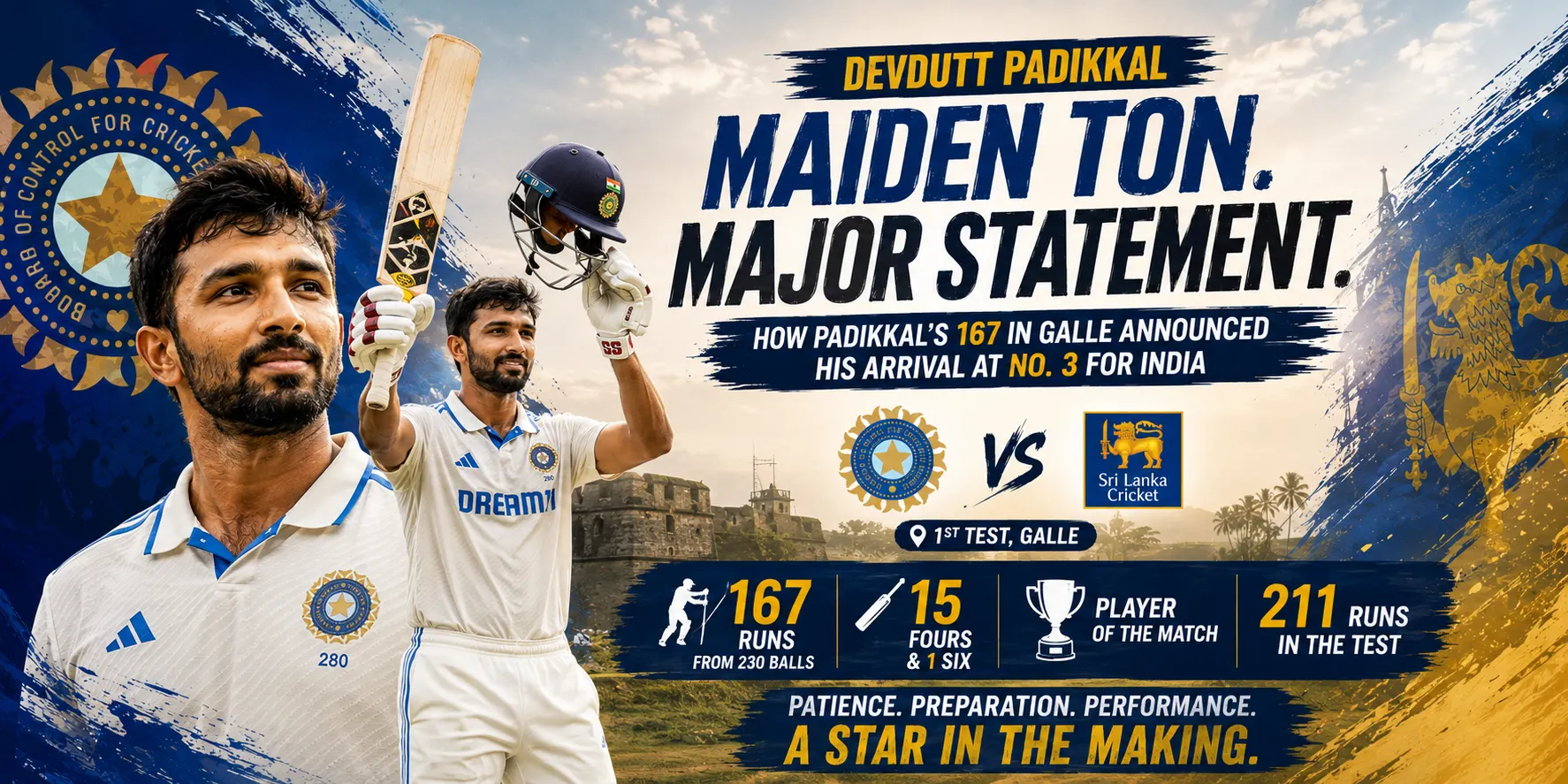
Devdutt Padikkal’s Red-Ball Evolution: How His Galle Masterclass Cemented His Place at No. 3
There was a time when Devdutt Padikkal’s name was regularly mentioned as a promising option for India, but the opportunity never seemed to arrive at the right time. He had the talent. He had the domestic numbers. He had already played for India. What he did not have was a proper run in the Test side. That changed in Galle. With Sai Sudharsan unavailable because of injury, Padikkal was given the No. 3 position for India’s opening Test against Sri Lanka. He did not simply take the opportunity. He grabbed it with both hands and produced the kind of innings that can change the direction of a young player’s career. His 167 was his maiden Test century, his highest score in the format and the innings that put his name firmly into India’s No. 3 conversation. He followed it with a composed 44 in the second innings as India went on to beat Sri Lanka by 165 runs. Across the Test, Padikkal made 211 runs, and his performance earned him Player of the Match honours. But the story is bigger than one hundred. What made Padikkal’s Galle performance so interesting was the amount of work that had gone into getting there. The innings looked effortless at times, but according to KL Rahul, there had been a lot happening behind the scenes while Padikkal waited for another chance. And that is perhaps the most important part of this story. Padikkal did not suddenly become a Test batter in Galle. He had been preparing for this moment for a long time. The opportunity came because India needed a No. 3 India did not enter the Sri Lanka series with a completely settled No. 3 position. Sai Sudharsan had been expected to be part of the batting group but was ruled out of the series with a toe injury. That opened the door for Padikkal, who had been waiting for another chance at Test level. It was not the first time Padikkal had been around the Test setup, but this opportunity felt different. He had already spent time in Sri Lanka with India A and had experience of the conditions. Before the Test, he also scored a century in India’s practice game against an SLC XI. Earlier in the India A matches, he had collected 173 runs across three innings. So when he walked out at No. 3 in Galle, he wasn’t arriving completely cold. He had already been scoring runs. He knew the conditions. And, perhaps most importantly, he knew that this could be the chance he had been waiting for. Padikkal had been waiting — and working One of the more revealing comments after his century came from KL Rahul. Rahul has known Padikkal since his days in the Karnataka system and has watched him develop through the age-group ranks. He said Padikkal had spent the previous couple of years waiting for his opportunity while quietly working on different parts of his batting in the nets. That detail makes the Galle innings even more interesting. From the outside, it can look as though a player simply gets selected, scores a hundred and suddenly becomes a serious international option. The reality is usually much slower. There are long stretches when nobody is watching. Domestic games. Net sessions. Technical changes. Time spent with India A. Conversations with senior players. Waiting for an injury or a selection call to finally create a gap. Padikkal had been through that process. When the opening arrived, he was ready. He himself said after reaching his century that he had dreamed of such a moment and had spent the previous two years working hard so that, when another opportunity came, he could make something special of it. That is probably a better explanation for his success than simply saying he was “in form.” The 167 was not just a big score Padikkal’s final score was 167 from 230 balls, with 15 fours and a six. Those numbers tell you that he scored at a healthy pace, but they don’t fully explain the innings. What stood out was his comfort against spin. Sri Lanka knew they would have to use their spinners heavily in Galle. Prabath Jayasuriya eventually took four wickets, and debutant Keshara Nuwantha also made an impact. Yet Padikkal managed to keep the pressure on them for much of his stay at the crease. He was particularly comfortable using the depth of his crease and playing off the back foot. That is a useful skill in Sri Lanka. You cannot simply charge every spinner. Nor can you spend an entire innings stuck on the crease waiting for the ball to come to you. Padikkal found a middle ground. He defended when he needed to, but he was also prepared to punish anything loose. That kept the Sri Lankan bowlers from settling into a comfortable rhythm. He looked like a batter who had already played 20 Tests Perhaps the most striking thing about the innings was the lack of panic. Padikkal was playing only his third Test. For a player with such limited international experience, he looked remarkably settled. India had already lost Yashasvi Jaiswal, and there was a long innings ahead. Instead of trying to force the pace, Padikkal gradually built his innings. He reached his first Test hundred in 134 balls and then kept going. That second part is important. Getting to a maiden Test century is one thing. Knowing what to do after reaching it is another. Padikkal spoke about this himself after the innings. He explained that the period immediately after reaching 100 is one he tries to treat very seriously because it is easy for a batter to relax after finally reaching the milestone. His approach worked. Instead of stopping at three figures, he pushed on to 150 and eventually made 167. That is the sort of habit India will want from their No. 3. The numbers put the innings into perspective Padikkal’s 167 was not just his first Test century. It

IPL 2027 Trade Window Speculations: 5 Star Players Franchise Captains Are Targetting
IPL 2027 Trade Window Speculations: 5 Star Players Franchise Captains Are Targeting The IPL 2027 trade window has already started producing the kind of rumours that make fans check their phones twice. One blockbuster trade is already done. Rishabh Pant has returned to Delhi Capitals, while Kuldeep Yadav has moved to Lucknow Super Giants, with the IPL officially confirming the deal on June 23. Pant will join Delhi at a revised fee of ₹15 crore, while Kuldeep remains on ₹13.5 crore. (IPL T20) That deal has changed the mood around the 2027 trade market. Teams now know that big-name trades are possible. Captains and management groups are looking at where their squads are short, which players could solve those problems and, importantly, whether a player swap makes more sense than going into the auction. And there are some huge names being linked with moves. The biggest story is still Hardik Pandya, but he isn’t the only superstar attracting attention. Suryakumar Yadav, Yashasvi Jaiswal and several other established players have also entered the rumour mill. Before we get into the names, one thing needs to be clear: apart from the Pant-Kuldeep trade, the moves discussed below are speculation or reported interest, not confirmed transfers. Neither the franchises nor the players have officially announced most of these proposed deals. With that in mind, here are five players who could become the biggest names of the IPL 2027 trade window. 1. Hardik Pandya – The Biggest Name on the Trade Radar If there is one player who has dominated the IPL 2027 trade conversation, it is Hardik Pandya. The Mumbai Indians captain has reportedly attracted interest from several franchises, including Delhi Capitals, Chennai Super Kings, Kolkata Knight Riders, Rajasthan Royals and Lucknow Super Giants. That alone tells you how unusual the situation has become. Hardik isn’t just another all-rounder. He is an Indian pace-bowling all-rounder who can bat in the middle order, bowl meaningful overs and captain an IPL side. Players who offer all three qualities are extremely difficult to find. Reports have suggested that Delhi Capitals could be interested in bringing him in, with Axar Patel and Prithvi Shaw mentioned as possible pieces in a potential deal. Sporting News also reported that CSK had been linked with Hardik, although CSK CEO Kasi Viswanathan has denied that the franchise is in talks to recruit him. (Sporting News) Then there is Rajasthan Royals. One of the most talked-about possibilities has been a Hardik Pandya–Yashasvi Jaiswal swap, with Jaiswal potentially moving to Mumbai. Reports have suggested that discussions between MI and RR have taken place, although there has been no official confirmation from either franchise. (Outlook India) And the latest twist is even more interesting. Hardik reportedly approached Gujarat Titans about returning to his former franchise. However, reports claim that the move stalled because Hardik wanted the captaincy, while Gujarat were committed to Shubman Gill. (Hindustan Times) That detail could be hugely important. Why do teams want Hardik? Because he solves several problems at once. A franchise doesn’t have to buy a separate middle-order power hitter, sixth bowling option and experienced leader. Hardik can potentially provide all three. For a team rebuilding after a disappointing season, that is extremely attractive. The interesting question is whether Mumbai Indians actually want to let him go. And that is where this entire story becomes difficult to predict. My take Hardik is the player most likely to create another blockbuster trade, but a move is far from certain. The captaincy question could ultimately decide his destination. 2. Suryakumar Yadav – The Captaincy Factor Could Change Everything Suryakumar Yadav is another name that has suddenly become a major part of the IPL 2027 trade conversation. Reports have linked the Mumbai Indians batter with Kolkata Knight Riders, Lucknow Super Giants and Delhi Capitals. The attraction isn’t difficult to understand. Suryakumar is not only one of the most destructive T20 batters around. He has also captained India in T20Is and brings considerable experience to a franchise dressing room. The latest reports suggest that captaincy could be one of the biggest reasons other franchises are interested in him. (MyKhel) But there is an important catch. There is no official confirmation that Mumbai Indians want to trade Suryakumar. In fact, the strongest reading of the current reports is that MI would prefer to retain him if possible. (MyKhel) So why are we even talking about a trade? Part of the speculation comes from Suryakumar’s difficult IPL 2026 campaign and reports about his relationship with Mumbai Indians. Some reports have also focused on his social-media activity and whether it points towards a possible change. But social-media clues are not the same thing as a confirmed transfer request. That distinction matters. Why would KKR be interested? KKR could be one of the most logical destinations if Suryakumar actually became available. The franchise needs a strong middle-order presence and has also had questions around leadership. Suryakumar would potentially solve both. He could walk into the middle order and immediately give KKR a proven Indian match-winner. He could also provide leadership experience. What about LSG and DC? Lucknow have already made one huge move by bringing Kuldeep Yadav in for Pant. Adding Suryakumar would be another major reshaping of their core. Delhi are also an interesting possibility because they have already brought Pant back. Adding another established Indian leader would completely change the look of their squad. But again, this remains a rumour rather than a done deal. My take Suryakumar is more likely to stay at MI than leave right now. But if Mumbai make him available, expect several franchises to get involved very quickly. 3. Yashasvi Jaiswal – The Young Star Who Could Become the Biggest Trade Prize This is probably the most surprising name on the list. Yashasvi Jaiswal is exactly the type of player most franchises would want to build around. He is young. He is Indian. He opens the batting. He can attack from the first over. And he already has international