India’s next T20I assignment will carry more significance than the three-match schedule might suggest.
The Board of Control for Cricket in India (BCCI) has announced a 15-member squad for the upcoming three-match T20I series against Afghanistan, with Shreyas Iyer as captain and Tilak Varma as vice-captain. Teenager Vaibhav Sooryavanshi has also been included, while Jasprit Bumrah, Nitish Kumar Reddy, Washington Sundar and Harshit Rana have been selected subject to fitness clearance.
The three matches are scheduled for September 13, 15 and 17 at the Arun Jaitley Cricket Stadium in Delhi.
The selection has immediately created two separate conversations.
The first is about the future of India’s T20I leadership and batting core.
The second is about fitness management.
India are not simply selecting their strongest possible XI. They are also trying to manage a squad through a long international calendar, injuries, rehabilitation and the need to develop players who could become important over the next few years.
That makes this Afghanistan series an important checkpoint.
India Squad for Afghanistan T20I Series: Full List
The BCCI’s official 15-member squad is:
- Shreyas Iyer — Captain
- Abhishek Sharma
- Vaibhav Sooryavanshi
- Sanju Samson — Wicketkeeper
- Ishan Kishan — Wicketkeeper
- Tilak Varma — Vice-Captain
- Shivam Dube
- Nitish Kumar Reddy*
- Axar Patel
- Washington Sundar*
- Varun Chakaravarthy
- Ravi Bishnoi
- Jasprit Bumrah*
- Arshdeep Singh
- Harshit Rana*
*Subject to fitness clearance.
This is the exact squad announced by the BCCI on September 1, 2026.
The balance is notable.
There is experience in the form of Bumrah, Axar Patel, Washington Sundar, Ishan Kishan, Sanju Samson and Shreyas Iyer. There is established T20 quality in Varun Chakaravarthy, Ravi Bishnoi, Arshdeep Singh and Abhishek Sharma. And there is a strong youth element through Vaibhav Sooryavanshi and the continued development of players such as Tilak Varma and Nitish Kumar Reddy.
It is therefore not a purely experimental squad.
It is a mixture of present strength and future planning.
Shreyas Iyer’s Captaincy Enters Another Important Phase
The biggest leadership story is Shreyas Iyer.
Iyer was appointed India’s T20I captain earlier in 2026, replacing Suryakumar Yadav following India’s successful T20 World Cup campaign. Tilak Varma was appointed his deputy.
The BCCI has now retained the same leadership combination for Afghanistan.
That matters because captaincy is not only about winning individual matches.
A new captain needs time to develop a playing philosophy, understand his preferred combinations and build relationships with players around him.
The Afghanistan series provides three matches in five days. That gives Iyer an opportunity to test combinations while still operating in a competitive international environment.
His biggest challenge will be managing resources.
India have several players capable of performing multiple roles. Abhishek Sharma can provide explosive batting and bowling options. Axar Patel and Washington Sundar can influence games with both bat and ball. Shivam Dube adds power in the middle order. Tilak Varma provides another flexible batting option.
The captain therefore has plenty of tools.
The difficult part is choosing when to use them.
Why Vaibhav Sooryavanshi’s Selection Matters
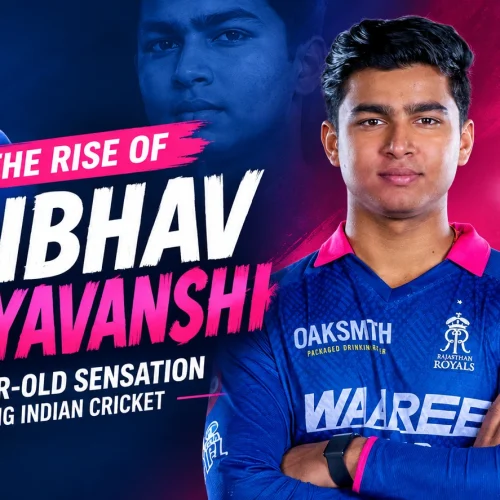
Perhaps the most exciting name in the squad is Vaibhav Sooryavanshi.
His selection is not completely unexpected.
The young batter had already entered India’s wider T20 plans during 2026. He was included in India’s T20I squads for the Ireland and England assignments and subsequently featured in India’s T20I squad for Zimbabwe.
His continued presence shows something important about India’s selection strategy.
The selectors are not treating youth selection as a one-off experiment.
They appear to be giving young players exposure around the senior group.
That is a better way to develop international cricketers.
A teenager does not necessarily need to be thrown into every match immediately. Sometimes simply being around an international squad, training with senior players, learning preparation routines and understanding the demands of international cricket can be valuable.
For Sooryavanshi, the Afghanistan series could therefore be about much more than whether he makes the XI.
If he plays, the attention will be enormous.
If he does not play, his inclusion still indicates that India’s selectors see him as part of the country’s future T20 planning.
The Fitness Asterisk: Why Four Players Are Under the Spotlight
The most debated part of the announcement is the asterisk beside four names:
- Jasprit Bumrah
- Nitish Kumar Reddy
- Washington Sundar
- Harshit Rana
The BCCI has explicitly stated that these players are subject to fitness clearance.
This distinction is important.
Being selected subject to fitness does not automatically mean a player is unfit to play.
It means final medical and fitness clearance remains necessary before the player can participate.
That is a normal but important distinction in modern international cricket.
India’s schedule has become increasingly demanding. Players move between domestic cricket, franchise cricket, international tours and major global tournaments. Fast bowlers, in particular, require careful workload management.
The selection of these four players therefore raises a legitimate question:
How much cricket should a returning or recovering player be asked to play?
There is no universal answer.
It depends on the player’s medical status, workload, rehabilitation progress, match readiness and the team’s wider schedule.
Jasprit Bumrah: The Biggest Fitness Question
Whenever Jasprit Bumrah’s name appears beside a fitness asterisk, the conversation becomes bigger.
That is understandable.
Bumrah is one of India’s most important players across formats, but his workload needs to be managed carefully because fast bowling places enormous physical demands on the body.
Earlier in 2026, Bumrah was not selected for India’s one-off Test and ODI series against Afghanistan as India continued to focus on workload management following a demanding period of cricket.
His inclusion in the Afghanistan T20I squad therefore represents another stage in his return to India’s T20 plans.
But inclusion does not necessarily mean three matches.
India have options.
The medical team can assess Bumrah before the series. The team management can decide whether he is ready for the first match. They can also manage his workload across the three games.
That flexibility is valuable.
The wrong approach would be to view fitness clearance as a simple green-light/red-light decision.
Modern cricket requires more detail.
A player can be fit enough to bowl but not necessarily ready for a maximum workload.
A player can be available but still require carefully controlled match exposure.
For Bumrah, the priority should be long-term availability rather than simply playing every available T20I.
Nitish Kumar Reddy’s Situation Deserves Attention
Nitish Kumar Reddy’s fitness situation is another reason the asterisk matters.
During India’s ODI series against Afghanistan in June, Reddy reported discomfort in his left quadriceps after the third ODI. The BCCI medical team recommended rehabilitation, and he was subsequently ruled out of India’s Ireland and England T20I assignments.
His return to the Afghanistan T20I squad suggests that the selectors are monitoring his recovery and believe he could potentially return to the setup.
But the final decision still depends on fitness clearance.
Reddy’s importance to the squad comes from his ability to contribute in multiple departments.
India value players who can strengthen the XI without creating selection problems.
A genuine all-rounder can allow the captain to field an additional specialist batter or bowler while maintaining balance.
That is why Reddy’s fitness could have a direct impact on India’s team combination.
Washington Sundar Adds Tactical Flexibility
Washington Sundar is another player whose fitness status matters strategically.
He offers India a useful combination of off-spin, batting depth and tactical flexibility.
In T20 cricket, flexibility can be more valuable than having a specialist for every role.
Sundar can potentially be used according to the opposition’s batting order, pitch conditions and match situation.
Against Afghanistan, spin could become especially important.
Afghanistan possess world-class spin resources, including Rashid Khan, Noor Ahmad and Mujeeb Ur Rahman. Their bowling attack can create pressure through variations, changes of pace and spin through the middle overs.
Having Sundar available would give India another strategic option.
However, just like the other players marked with an asterisk, his selection remains conditional on fitness clearance.
Harshit Rana’s Return Adds Another Fast-Bowling Option
Harshit Rana has already shown how the BCCI is using rehabilitation and fitness monitoring before bringing players back into international cricket.
In June, the BCCI confirmed that Rana had completed rehabilitation at the BCCI Centre of Excellence and added him to India’s squad for the third ODI against Afghanistan.
His selection for the upcoming T20Is therefore represents another stage of his return.
Rana provides India with another pace option alongside Bumrah and Arshdeep Singh.
If both Bumrah and Rana are cleared, India could have a powerful combination of experience and emerging pace.
But once again, the fitness clearance is the key.
Is BCCI Rushing Players Back?
This is the biggest debate surrounding the squad.
The simple answer is: the official announcement does not establish that the BCCI is rushing anyone back.
The BCCI has specifically marked four players as subject to fitness clearance.
That wording actually leaves room for the medical team and management to make the final decision.
The selection committee can select a player as part of the wider squad while still allowing the medical team to determine whether he is ready for competitive action.
This approach is particularly relevant in fast-paced international cricket.
India have already demonstrated that they are willing to withdraw players for workload or medical reasons.
For example, Mohammed Siraj was withdrawn from India’s Ireland and England T20I squads in June after discussions between the BCCI Medical Team and team management. The BCCI described the decision as a precautionary workload-management measure designed to ensure adequate recovery ahead of a long international season.
That provides useful context for understanding the current selection.
The fitness asterisk should therefore be viewed as a warning sign to monitor, not proof of poor selection.
What Could Happen If Players Fail Fitness Tests?
This is where squad depth becomes important.
India have deliberately selected enough players to build multiple combinations.
If Bumrah is unavailable, Arshdeep Singh remains a major pace option.
If Harshit Rana cannot play, India still have bowling resources available.
If Washington Sundar is unavailable, Axar Patel and Ravi Bishnoi provide spin options.
If Nitish Kumar Reddy does not receive clearance, Shivam Dube can provide some of the all-round balance.
This is one of the biggest strengths of the current India setup.
The selectors do not need every player to be available to field a competitive XI.
That gives the management room to make conservative medical decisions.
India’s Batting Combination Looks Particularly Interesting
India’s batting group contains several different styles.
Abhishek Sharma provides attacking intent at the top.
Sanju Samson and Ishan Kishan give the team two wicketkeeper-batter options.
Tilak Varma offers left-handed middle-order flexibility.
Shivam Dube provides power against spin and can potentially contribute with the ball.
Vaibhav Sooryavanshi adds another young attacking option.
And Shreyas Iyer brings experience and leadership.
The interesting selection decision will be how India fit these players into an XI.
A squad can have 15 excellent players.
Only 11 can play.
That makes the role of the captain and coaching staff crucial.
Spin Could Become a Major Battle Against Afghanistan
Afghanistan’s strength in T20 cricket has traditionally been heavily connected with spin.
The current squad contains Rashid Khan, Noor Ahmad, Mujeeb Ur Rahman and Nangyal Kharoti, alongside experienced all-rounders such as Mohammad Nabi and Gulbadin Naib.
That makes India’s spin planning important.
India have Axar Patel, Washington Sundar, Varun Chakaravarthy and Ravi Bishnoi available in the squad.
The selection committee has therefore provided several different spin profiles.
Varun can attack with mystery spin and variations.
Bishnoi offers attacking leg-spin.
Axar provides left-arm orthodox spin and batting depth.
Sundar brings off-spin and additional batting ability.
The pitch and match conditions in Delhi could determine which combination India ultimately choose.
Afghanistan Will Not Be an Easy Opponent
It would be a mistake to view Afghanistan simply as a side India should beat comfortably.
Afghanistan have built a strong T20 identity over the past several years.
Their squad for this series includes Ibrahim Zadran as captain, Rahmanullah Gurbaz, Sediqullah Atal, Azmatullah Omarzai, Gulbadin Naib, Mohammad Nabi, Rashid Khan, Noor Ahmad, Mujeeb Ur Rahman, Fazalhaq Farooqi and Naveen-ul-Haq.
Naveen’s return is particularly notable.
He has returned to the Afghanistan setup after recovering from a stress fracture in his right shoulder that had kept him out of the team’s previous T20I series against West Indies and the 2026 T20 World Cup.
Afghanistan also have a new T20I leadership chapter.
Ibrahim Zadran is their full-time T20I captain, making this series his first assignment in that role.
That creates an interesting leadership battle.
Shreyas Iyer is establishing himself as India’s new T20I captain.
Ibrahim Zadran is beginning his tenure as Afghanistan’s full-time T20I captain.
Both will have something to prove.
Why Playing All Three Matches in Delhi Matters
All three matches will take place at the Arun Jaitley Cricket Stadium.
The schedule is:
| Match | Date | Venue |
|---|---|---|
| 1st T20I | September 13, 2026 | Arun Jaitley Stadium, Delhi |
| 2nd T20I | September 15, 2026 | Arun Jaitley Stadium, Delhi |
| 3rd T20I | September 17, 2026 | Arun Jaitley Stadium, Delhi |
The BCCI and Afghanistan Cricket Board confirmed the three-match series as part of Afghanistan’s Future Tours Programme.
From a planning perspective, playing at one venue removes some travel demands.
That can help teams manage recovery between matches.
It also means the teams will quickly understand the conditions.
The first match could provide useful information for the second.
The second can influence selection for the third.
For Iyer and the Indian management, this creates an opportunity to experiment without completely changing the environment between games.
The Bigger Picture: India Are Building Beyond One Series
The most important thing about this squad may not be who plays Afghanistan.
It may be who India are preparing for the future.
The current T20I structure already shows a clear emphasis on developing a core around younger players while retaining experienced match-winners.
The continued selection of Vaibhav Sooryavanshi is one example.
The leadership pairing of Iyer and Tilak Varma is another.
The presence of players such as Abhishek Sharma, Nitish Kumar Reddy and Harshit Rana shows that India are investing in players who can become important over multiple international cycles.
This is good planning.
International cricket cannot be built around one tournament.
It requires succession planning.
A player needs opportunities before becoming an established international.
A captain needs time before being judged properly.
A young player needs exposure before being expected to perform under enormous pressure.
The Afghanistan T20I series can contribute to all three.
What Should India Prioritise?
India’s priorities should be clear.
1. Protect player fitness
The first priority should be ensuring that returning players are genuinely ready.
There is little value in rushing a major player into a bilateral T20I if it creates a bigger injury problem later.
2. Give the capta leadership group.
Constantly changing the captain makes it harder to establish a clear team identity.
3. Develop Vaibhav carefully
The attention around a teenage international prospect can become overwhelming.
India should focus on development rather than headlines.
4. Build multiple bowling combinations
The team should use the series to understand which combinations work best against different opponents.
5. Maintain competition for places
Players should know that strong domestic and franchise performances can still lead to opportunities.
That keeps the wider Indian cricket system healthy.
What the Fitness Debate Really Tells Us
The debate around the four fitness asterisks is actually bigger than four players.
It represents a modern problem in international cricket.
India have more cricket than ever.
Players are expected to perform across formats, tournaments and leagues.
At the same time, fans expect the strongest possible team every time India plays.
Those two demands do not always fit together.
Sometimes the best decision for a team is not to select its strongest available XI.
Sometimes the best decision is to leave a player out.
Sometimes the best decision is to select the player but wait for medical clearance before deciding whether he plays.
That appears to be the situation with Bumrah, Reddy, Sundar and Rana.
The final verdict should therefore come after the fitness assessments, not immediately after the squad announcement.
Will Vaibhav Sooryavanshi Make His T20I Debut?
That will be one of the biggest questions before the opening match.
His inclusion creates the possibility of another milestone.
But selection does not guarantee a debut.
India have several established batting options, and the management may decide that the best way to develop him is to introduce him gradually.
On the other hand, if the team believes his form and preparation justify selection, the Afghanistan series could become the stage for another memorable moment in Indian cricket.
Either way, his presence is significant.
India are clearly looking beyond the immediate cycle.
Shreyas Iyer’s Next Test as Captain
For Iyer, the Afghanistan series should be viewed as another opportunity to strengthen his leadership credentials.
The pressure will be different from that on an established captain.
He will be judged not only on results but also on how he handles combinations, young players, senior players and fitness-related selection issues.
A strong captain does not simply pick the biggest names.
A strong captain builds a side capable of winning under different circumstances.
That is the challenge waiting for Iyer.
Final Verdict: A Squad Built for Both the Present and the Future
The India squad for Afghanistan T20I series is not simply about three matches in Delhi.
It is another step in India’s T20I transition.
Shreyas Iyer has been given another opportunity to lead.
Tilak Varma continues as vice-captain.
Vaibhav Sooryavanshi remains firmly within India’s developing T20 structure.
At the same time, the selection of Jasprit Bumrah, Nitish Kumar Reddy, Washington Sundar and Harshit Rana subject to fitness clearance shows how carefully player availability has to be managed.
The important point is that the BCCI’s official announcement does not confirm that any of these players are being rushed back. Instead, it explicitly leaves their participation dependent on fitness clearance.
That distinction should remain at the centre of the debate.
The real test will come closer to September 13.
If the returning players are cleared and India can field its strongest combination, Afghanistan will face a powerful side containing experience, youth, pace, spin and batting depth.
If some players fail to receive clearance, India’s squad still contains enough depth to build a competitive XI.
That is probably the most encouraging feature of this selection.
India are not depending on one player.
They are building a group.
And as the international calendar moves forward, that may prove far more important than winning any single bilateral series.
India vs Afghanistan T20I Series: Key Takeaways
- Shreyas Iyer will captain India in the three-match T20I series.
- Tilak Varma has been named vice-captain.
- Vaibhav Sooryavanshi has been included in the 15-member squad.
- Jasprit Bumrah, Nitish Kumar Reddy, Washington Sundar and Harshit Rana are subject to fitness clearance.
- All three matches will be played at Arun Jaitley Stadium in Delhi.
- The matches are scheduled for September 13, 15 and 17.
- Afghanistan will be led by Ibrahim Zadran.
- Afghanistan’s squad contains major T20 threats including Rashid Khan, Noor Ahmad, Mujeeb Ur Rahman, Mohammad Nabi, Azmatullah Omarzai and Naveen-ul-Haq.
- The fitness decisions could significantly influence India’s final XI.
- The series offers India another opportunity to develop its next generation while maintaining a competitive senior core.
One final note on the “Krunal Pandya cryptic snub post” angle: I have deliberately not included it as a factual part of this article because the official BCCI and ICC material available for the squad announcement does not establish that claim. If a verified post or direct statement emerges, it can be covered separately with proper context rather than presenting social-media speculation as confirmed news.