Indian women’s cricket has changed quite a bit over the last few years.
There was a time when the team could be competitive for long periods but still depended heavily on one or two batters producing something special. Now the picture is different. India have more depth, more attacking options and, perhaps most importantly, two senior batters who continue to set the standard.
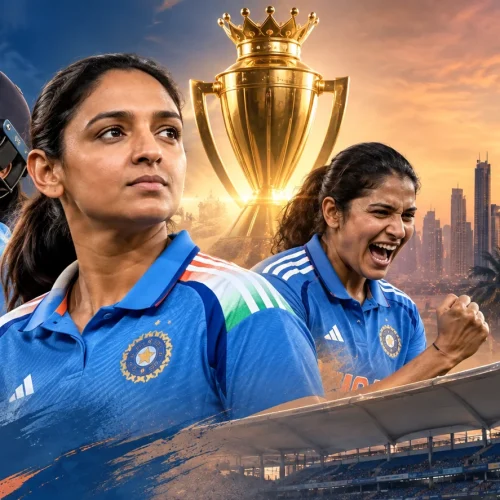
Smriti Mandhana and Harmanpreet Kaur are at the centre of that change.
They don’t bat in exactly the same role. Mandhana is the elegant left-handed opener who can take a game away from an opposition inside the powerplay. Harmanpreet usually comes in further down the order, where the game can demand something completely different from her.
But together, they form the experienced batting core around which India’s top and middle order has been built.
And the interesting thing about their current form is that it isn’t based on one tournament or one memorable innings.
Mandhana has continued to produce runs across formats, while Harmanpreet has remained one of India’s most important big-match batters and leaders. Their contributions were visible again during India’s historic Test win at Lord’s, and both remain central to the team’s plans for the upcoming Asia Cup and Asian Games.
With India preparing for another busy stretch of international cricket, the question isn’t whether these two players still matter.
It is how much longer India can keep getting this level of influence from them.
Mandhana and Harmanpreet are coming off very different summers
The numbers tell an interesting story.
During the 2026 Women’s T20 World Cup, Mandhana scored 205 runs at a strike rate of 140.41, while Harmanpreet made 141 runs at 131.78. India did not make the semi-finals after losing to South Africa and Australia, and Australia eventually won the tournament.
So it would be wrong to describe India’s T20 World Cup campaign as dominant.
It wasn’t.
India had some very good moments, including a 95-run win over the Netherlands, but the defeats against South Africa and Australia ended their tournament early.
Yet even in that disappointing campaign, Mandhana and Harmanpreet were among India’s more reliable batting options.
That matters because international cricket isn’t judged only by the tournaments a team wins.
The ability to keep producing runs when the team isn’t at its best is what separates established players from occasional performers.
Mandhana remains India’s most natural tempo-setter
There is still something different about watching Mandhana bat when she gets going.
She doesn’t always need a lot of balls to change the mood of an innings.
Her cover drive remains one of the cleanest shots in women’s cricket, but what has made her so effective in recent years is the way she has expanded her range without losing that natural timing.
India have increasingly looked to attack earlier in T20 cricket, and Mandhana is perfectly suited to that approach.
Her performance against the Netherlands at the 2026 T20 World Cup was a good example.
She made 74 off 47 balls, helping India reach 209/5. More importantly, she and Shafali Verma put together a 115-run opening partnership, giving India control of the match almost immediately.
That is the Mandhana role at its best.
She doesn’t necessarily have to bat through the entire innings.
If she gives India 60 or 70 quickly, the rest of the batting order can play with much more freedom.
Her consistency isn’t limited to T20 cricket
One of the most impressive things about Mandhana’s recent career is that her batting has travelled across formats.
She remains ranked No. 1 in the ICC Women’s ODI batting rankings, with Harmanpreet also inside the top 10. The latest available rankings list Mandhana first with 790 rating points and Harmanpreet ninth with 652.
That is significant because ODI cricket demands a different type of batting from T20.
There are times when Mandhana needs to attack.
There are also days when she needs to bat 30 or 40 overs and build an innings.
Her recent Test performances have shown another side to her game.
At Lord’s, she scored 83 in the first innings and 70 in the second, becoming only the fourth Indian woman to score fifty-plus in both innings of a Test.
That was not a case of Mandhana simply playing her T20 game in a longer format.
She batted for time.
She absorbed pressure.
And she still found scoring opportunities.
That ability makes her much more valuable than simply being India’s attacking opener.
Lord’s was a reminder of what both players bring
The first-ever women’s Test at Lord’s was a landmark match for Indian cricket.
India won by 270 runs, and Mandhana played an important role in setting the tone.
She made 83 in the first innings, while Harmanpreet scored 58. Their contributions helped India reach 285 after being asked to bat first.
It wasn’t a huge total by Test standards, but the important part was how India recovered from pressure.
Mandhana gave the innings momentum.
Harmanpreet then played the more patient role.
That difference in approach is exactly why the two complement each other so well.
Mandhana can get India moving.
Harmanpreet can take over when the game enters its middle phase.
And when both are contributing, India have a much stronger base for the batters that follow.
Harmanpreet’s game has always been about timing
Harmanpreet’s batting can sometimes be misunderstood because people remember the big sixes.
That is understandable.
She has built a reputation as one of the most powerful hitters in women’s cricket.
But her importance to India is not only about hitting boundaries.
She has become much more comfortable judging when to attack and when to stay at the crease.
Her 58 at Lord’s came from 121 balls, which tells you everything about the situation. She did not try to force the game. She recognised that India needed someone to stay there and build the innings.
That is a different version of Harmanpreet.
And it is probably the version India need more often.
The big shots are still there.
The difference is that she doesn’t have to search for them every time she walks out.
Her recent T20 numbers are strong too
Harmanpreet’s 2026 numbers in the WPL were particularly impressive.
Playing for Mumbai Indians, she scored 342 runs in eight innings at an average of 68.40 and a strike rate of 150.66.
Mandhana, meanwhile, scored 377 runs for Royal Challengers Bengaluru at an average of 53.86 and a strike rate of 152.63, winning the Orange Cap as RCB lifted their second WPL title.
That tells us something important.
Both players have been producing at a high level even before they put on the India shirt.
The WPL has also given them more exposure to different bowling attacks, different match situations and the pressure of playing in front of large crowds.
That experience has become useful for international cricket.
The WPL has helped India build a stronger batting culture
This is where the bigger change in Indian women’s cricket becomes visible.
Mandhana and Harmanpreet are no longer expected to do everything.
India now have players such as Shafali Verma, Jemimah Rodrigues, Richa Ghosh and Deepti Sharma who can change games.
Mandhana herself spoke about the growth of India’s power-hitting before the T20 World Cup, pointing to players such as Richa, Shafali and Harmanpreet and saying the team’s batting now has greater depth and intent.
That is an important observation from someone inside the group.
India’s batting is not just about individual talent anymore.
There is a clearer identity.
Attack when the opportunity is there.
Keep the pressure on.
Don’t be afraid of scoring quickly.
And if the situation requires a slower approach, have enough experience to adjust.
Mandhana’s role has changed slightly with India’s attacking approach
Earlier in her career, Mandhana was often the player expected to provide the bulk of India’s momentum.
Now she has more freedom.
If Shafali starts quickly at the other end, Mandhana can choose when to take over.
If India lose an early wicket, she can bat longer.
If the powerplay goes well, she can continue attacking.
That flexibility is important.
It means Mandhana doesn’t have to play the same innings every time.
Her 74 against the Netherlands at the T20 World Cup is a good example of the aggressive version.
Her 83 and 70 at Lord’s show the patient version.
Both are now part of her game.
Harmanpreet has become more than just a batter
This is probably the biggest difference between Harmanpreet now and Harmanpreet earlier in her career.
She is not simply walking in at No. 4 and trying to win the game with the bat.
She is leading the side.
She is managing younger players.
She is making field changes.
She is deciding when to attack with the ball.
And she is carrying the expectations that come with captaining India.
At Lord’s, that leadership was visible.
India’s bowling changes worked, their fielding was sharp and they kept England under pressure after gaining the first-innings advantage. Harmanpreet later praised her team’s top order for absorbing the early pressure and highlighted the improvement in India’s fielding.
That is the part of her contribution that does not always show up in a scorecard.
Ellyse Perry’s assessment is worth hearing
There is also an interesting outside perspective on these two players.
Australian great Ellyse Perry recently praised both Mandhana and Harmanpreet.
Perry described Mandhana’s skill, willpower and mental strength as major reasons behind her success. She also highlighted Harmanpreet’s tenacity as one of her defining qualities.
That is significant coming from Perry.
She has played against both players repeatedly and has seen them at their best and worst.
Her description of Mandhana points towards something that can be overlooked when people focus only on her beautiful strokeplay.
There is a lot of discipline behind it.
And with Harmanpreet, the ability to keep going through difficult periods has always been one of her biggest strengths.
Their partnership is not about batting together
There is an easy mistake to make when discussing Mandhana and Harmanpreet.
They are not an opening pair.
They don’t normally walk out together at the start of an innings.
So calling them a traditional “top-order partnership” would not really be accurate.
Their partnership is bigger than that.
Mandhana gives India an experienced left-handed presence at the top.
Harmanpreet provides stability and power in the middle.
One sets the tempo.
The other often controls the transition from consolidation to attack.
Together, they give the batting order structure.
And that is probably the best way to understand their importance.
India’s recent red-ball success adds another layer
The Lord’s Test was particularly encouraging because India didn’t need Mandhana or Harmanpreet to score hundreds.
They simply needed them to contribute.
Mandhana made 83 and 70.
Harmanpreet made 58 and 16.
Yastika Bhatia scored 113.
Richa Ghosh made 50.
Deepti Sharma scored 57.
That is exactly what a strong batting unit looks like.
The senior players create the platform.
Someone else takes the game away.
India eventually declared on 341/7 and bowled England out for 186 to win by 270 runs.
It was not a two-player show.
And that is a positive development.
The disappointment of the T20 World Cup shouldn’t be ignored
If we are being honest about India’s current form, there is one thing that cannot be brushed aside.
The 2026 T20 World Cup did not go according to plan.
India entered the tournament after winning the 2025 Women’s Cricket World Cup and were hoping to build on that momentum. Instead, they exited in the group stage after defeats to South Africa and Australia. Australia eventually won the title.
That means the current narrative should not be that India are simply dominating everything.
They aren’t.
What is more accurate is that India have a strong core, experienced senior players and enough batting quality to compete at the highest level — but they are still working towards greater consistency in T20 cricket.
Mandhana and Harmanpreet are central to solving that problem.
The Asia Cup is the next opportunity
India now turn their attention towards the ACC Women’s Asia Cup, which begins in the UAE on August 28.
Harmanpreet will continue as captain, with Mandhana as vice-captain. However, India have already suffered a significant blow with Jemimah Rodrigues ruled out because of a high-grade hamstring tear. Pratika Rawal has been brought into the Asia Cup squad as her replacement.
That makes the senior batting duo even more important.
With Jemimah unavailable, India lose one of their best middle-order options.
The responsibility will naturally shift towards the established players.
Mandhana will be expected to provide the early runs.
Harmanpreet will have to manage the middle overs and finish innings when required.
And the younger players will need to make the most of their opportunities around them.
The Asian Games will bring another challenge
India will then head into the Asian Games in Japan in September as defending champions.
The BCCI has retained Harmanpreet as captain and Mandhana as vice-captain in a strong squad.
That decision says plenty about how the team management views the pair.
Even after a disappointing T20 World Cup, the leadership group has not been broken up.
There is still faith in the experience of Harmanpreet and Mandhana.
And considering India’s busy schedule, that continuity could be important.
Why Mandhana’s current form matters so much
Mandhana’s job is slightly different from that of most senior players.
Because she opens, she can influence the game before the opposition has even settled.
If she gets through the first few overs, India’s scoring rate can climb quickly.
If she scores 50 in the powerplay period of an ODI or builds a substantial partnership in a Test, the rest of the batting order gets a much easier job.
Her recent T20 World Cup numbers 205 runs at a strike rate above 140 show that she still has that attacking gear.
Her WPL season reinforces it.
Her Lord’s Test reinforces something else: she can slow down when the situation demands it.
That combination is what makes her so valuable.
Why Harmanpreet’s role could become even more important
Jemimah’s injury means Harmanpreet may have even more responsibility in the coming weeks.
She has already shown this year that she can score quickly when required.
During the WPL, she averaged 68.40 and struck at 150.66, finishing with 342 runs for Mumbai Indians.
She also topped India’s run charts during the five-match T20I series in South Africa with 169 runs, despite India losing the series 4-1.
That series is actually a useful reminder of Harmanpreet’s value.
India didn’t win many matches, but their captain still produced.
That is leadership through performance rather than simply through words.
The most encouraging thing is the age of India’s batting depth
Mandhana and Harmanpreet are experienced players, but they are no longer surrounded by a team that depends entirely on them.
That is perhaps the biggest sign of progress.
Shafali can attack.
Richa can finish.
Deepti can bat in pressure situations.
Jemimah, when fit, can control the middle overs.
Yastika has now shown that she can produce a match-winning Test innings.
And younger players are gradually entering the setup.
That means Mandhana and Harmanpreet can focus on doing what they do best rather than trying to rescue India every time a wicket falls.
There is still one question India need to answer
Can the senior batting core turn good individual performances into more consistent team results in T20 cricket?
That is where the next few months will be interesting.
India have already shown they can dominate teams such as the Netherlands and Pakistan in the T20 World Cup.
They have also shown they can beat Australia in bilateral cricket and produce a historic Test victory at Lord’s.
But the defeats against South Africa and Australia at the T20 World Cup exposed some weaknesses.
The Asia Cup will give India another chance to fix those issues.
And with Jemimah unavailable, Mandhana and Harmanpreet will have an even bigger role.
The long-term picture
Mandhana is already one of the most recognisable batters in women’s cricket.
Harmanpreet is now one of the most experienced captains in the international game.
But their importance to India goes beyond reputation.
They are still producing.
Mandhana remains No. 1 in ODI batting.
Harmanpreet remains a top-10 ODI batter.
Both were among the leading Indian run-scorers at the 2026 T20 World Cup.
Both had excellent WPL campaigns.
And both played important roles in India’s historic Lord’s Test victory.
That is a pretty strong body of work.
What the next generation can learn from them
There is also a mentoring side to this.
Young players entering India’s setup now are growing up in a team where Mandhana and Harmanpreet are established names.
They get to see how these players prepare.
How they handle a bad innings.
How they deal with pressure.
How they change their approach between formats.
And perhaps most importantly, how they remain useful after years at the international level.
That experience cannot be bought.
India can develop new talent, but having experienced players around those youngsters gives the team a better chance of turning talent into consistent international performers.
Final word
Smriti Mandhana and Harmanpreet Kaur are no longer simply two of India’s biggest names.
They are part of the foundation of the team.
Mandhana continues to give India that attacking start at the top of the order. She can dominate a powerplay, but she has also shown at Lord’s that she can bat patiently and build a Test innings when the situation calls for it.
Harmanpreet brings something different.
She is the bridge between India’s top order and lower middle order, the player who can absorb pressure one day and tear an attack apart the next. Her leadership gives her an additional responsibility, but her recent numbers suggest she is still capable of carrying a substantial batting workload.
The 2026 T20 World Cup did expose some cracks in India’s game. They exited in the group stage, and that disappointment should not be forgotten.
But neither should the bigger picture.
India won the 2025 ODI World Cup.
They won the second WPL title with Mandhana leading RCB.
They produced a historic 270-run Test victory at Lord’s.
Mandhana continues to sit at the top of the ODI batting rankings.
Harmanpreet continues to lead the side.
And now, with the Asia Cup and Asian Games ahead, both are still central to India’s plans.
The next phase of Indian women’s cricket will eventually belong to the younger generation.
For now, though, Mandhana and Harmanpreet are still setting the standard one at the top of the order, the other in the middle, and both at the heart of India’s ambitions.